

Hummer EV Torque Explained: What 11,500 lb-ft Actually Means
If you’ve spent even 5 minutes looking into the GMC Hummer EV, you’ve probably stopped at one number that seems almost impossible: 11,500 lb-ft of torque.It’s a real number. GMC publishes it for the range-topping 3X trim. At the same time, it’s probably the most misunderstood specification you’ll see on…
If you’ve spent even 5 minutes looking into the GMC Hummer EV, you’ve probably stopped at one number that seems almost impossible: 11,500 lb-ft of torque.It’s a real number. GMC publishes it for the range-topping 3X trim. At the same time, it’s probably the most misunderstood specification you’ll see on any electric vehicle.
A lot of people see that figure and assume the Hummer EV can pull harder than a heavy-duty diesel truck. That’s an easy conclusion to reach, but it doesn’t tell the full story. The number comes from the way GMC measures torque, and that’s where most of the confusion starts.
By the time you finish reading, you’ll know what Hummer EV torque actually means, how GMC calculates it, how it compares with rivals like the Rivian R1T and Ford F-150 Lightning, and what that number feels like in everyday driving. You’ll also see why buyers in Europe need to think through a few extra things before importing one.
Table of Contents
How much torque does the Hummer EV actually have?
Here’s the quick answer.
The GMC Hummer EV produces 7,400 lb-ft of torque in the 2X trim and up to 11,500 lb-ft of torque in the 3X trim, according to GMC’s official specifications. Those figures apply to both the Pickup and the SUV.
| Trim | Motors | Horsepower | GMC-Claimed Torque |
|---|---|---|---|
| 2X (Pickup & SUV) | 2 | 570–625 hp | 7,400 lb-ft |
| 3X (Pickup & SUV) | 3 | 830–1,000 hp | Up to 11,500 lb-ft |
The torque ratings stay the same across both body styles. Horsepower shifts a bit depending on the model year and whether you’re looking at the Pickup or the SUV.
Why the torque number is so much bigger than you’d expect
This is the detail that causes almost all the confusion, and most brochures skip right past it.
GMC doesn’t publish torque at the electric motors. It publishes torque at the wheels, after gear reduction.
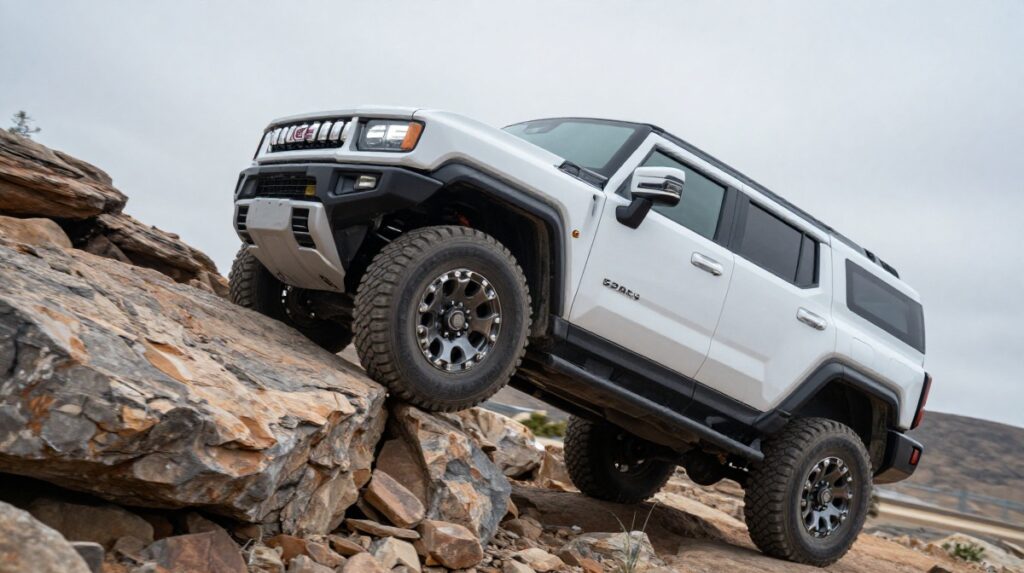
Every electric motor makes its own torque. Before that force ever reaches the tires, it passes through a reduction gearbox. That gearbox multiplies the torque, so the wheels end up receiving far more twisting force than the motors produce on their own. GMC adds up the wheel torque from all 3 motors, and that’s how you land on that headline figure of 11,500 lb-ft.
Think about using a wrench. A longer wrench makes it easier to loosen a stubborn bolt because it gives you more leverage. Your arm isn’t suddenly stronger. The tool just multiplies the force you’re already putting in. The Hummer EV’s reduction gears do the same thing to the motors’ output before it ever hits the wheels.
Why this matters if you’re buying one:
Gas and diesel trucks publish engine torque measured at the crankshaft. The Hummer EV publishes wheel torque. Those numbers come from two different points in the drivetrain, so lining them up side by side won’t give you an honest comparison.
Horsepower matters more here than most buyers realize. The Hummer EV’s towing and hauling performance comes down to the whole powertrain working together, not just the torque figure printed on the window sticker.
Tow ratings tell the same story. Depending on trim and configuration, the Hummer EV can tow between 7,500 and 12,000 pounds. Several rivals post similar or higher towing numbers while advertising torque figures that look small by comparison. That’s because towing depends on a lot more than torque. Axles, suspension, cooling systems, chassis strength, battery thermal management, and plain old vehicle weight all decide how well a truck handles a heavy load.
A bigger torque number doesn’t automatically make a better tow vehicle. I know it feels like it should. It just doesn’t work that way.
Hummer EV torque vs. the competition
Here’s how the Hummer EV stacks up against a few other electric trucks and SUVs on the market right now.
| Vehicle | Claimed Torque | 0–60 mph | Max Towing |
|---|---|---|---|
| GMC Hummer EV 3X | Up to 11,500 lb-ft | 3.0–3.3 sec | Up to 12,000 lbs (2X) |
| Rivian R1T Quad-Motor | 14,000 lb-ft | 3.5 sec | Up to 11,000 lbs |
| Ford F-150 Lightning Platinum | 775 lb-ft (motor) | 4.0 sec | Up to 10,000 lbs |
| Tesla Cybertruck Cyberbeast | 10,296 lb-ft | 2.6 sec | Up to 11,000 lbs |
A couple of things jump out here.
The Hummer EV sits near the top, though Rivian actually claims a higher wheel-torque number with the Quad-Motor R1T. Ford does things differently. The F-150 Lightning’s published torque comes from the motors, not the wheels, so its number looks a lot smaller even though the truck itself is plenty capable.
Acceleration is where the Hummer EV really separates from the pack. Flip it into Watts to Freedom mode, and the 3X trim gets to 60 mph in about 3 seconds. In a truck that weighs over 9,000 pounds, that’s genuinely wild.
What Hummer EV torque feels like in real driving
Spec sheets only get you so far. Here’s what that torque actually does once you’re behind the wheel.
Off-road crawling. Electric motors don’t need to build up power like a combustion engine does. All that torque is there from a dead stop, which makes rock crawls and steep climbs feel more controlled at low speed.
Highway merging and passing. Since the torque doesn’t wait around for an RPM peak, the Hummer EV feels explosive whenever you need a quick burst, whether that’s merging onto the highway or passing on a two-lane road.
Towing under load. This is where it gets more complicated. Owners report a real hit to range when towing near the max rating. And the truck’s own weight, over 9,000 pounds before you even hook up a trailer, means the motors are working hard regardless of how much torque is on paper.
Watts to Freedom launch mode. This feature briefly overcharges the battery and preps the motors for maximum torque delivery right at launch. That’s how GMC pulls off sub-3.5-second 0–60 runs in something this heavy.
Hummer EV torque for European buyers
GMC doesn’t sell the Hummer EV through official dealerships in Europe, so most interest there runs through specialist importers or private grey-market deals. A few things to keep in mind.
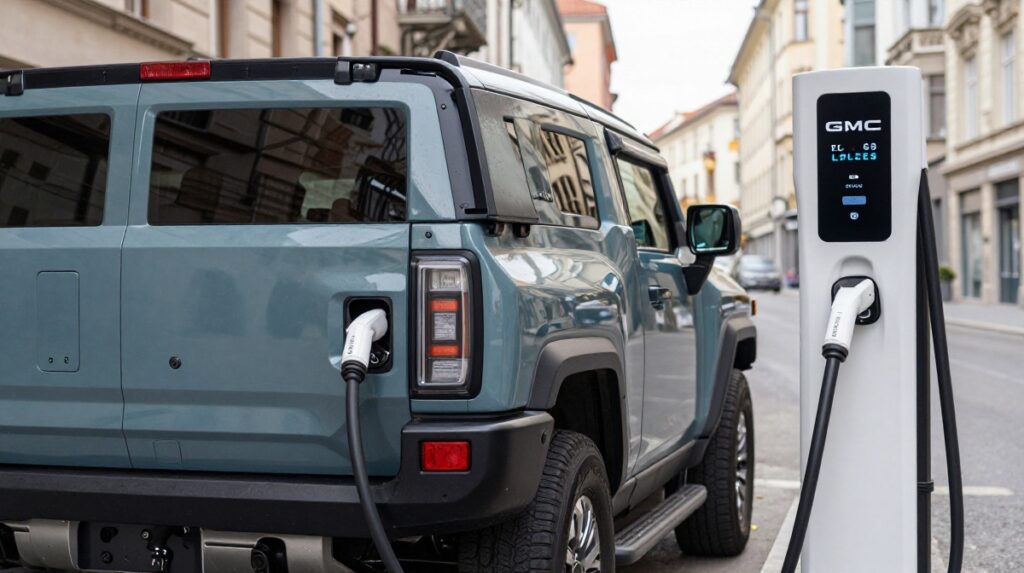
Type approval and registration rules vary a lot by country. Torque and power figures on official paperwork might read differently under EU testing standards (WLTP) compared to the EPA numbers GMC uses in the US. Charging is another wrinkle. Europe typically runs on CCS2 connectors, so check compatibility before you import anything.
Size is the one people underestimate. At nearly 87 inches wide, the Hummer EV can be a genuinely tight squeeze in older European parking structures and narrow city streets.
If you’re thinking about an import, work with a specialist who actually knows EV homologation rules in your country. Torque and power numbers alone won’t tell you whether the thing is even road-legal where you live.
Common mistakes buyers make when evaluating Hummer EV torque
- Assuming higher torque means better towing. It doesn’t, not on its own, as covered above.
- Comparing wheel torque to motor torque. Always check where a manufacturer measures torque from. Wheel and motor figures aren’t the same number wearing different clothes.
- Ignoring the range impact. Max torque and modes like Watts to Freedom pull hard on the battery. If range matters to you, understand how performance modes chip away at it.
- Overlooking real-world weight. A torque figure says nothing about the vehicle’s own curb weight, and that weight decides how much of that torque actually turns into acceleration or hauling power.
Hummer EV torque is real, and it’s massive. It’s also one of the most misunderstood numbers in the EV world. That 11,500 lb-ft figure is torque at the wheels after gear reduction, not something you can line up next to a traditional engine spec sheet. What it does deliver is genuinely explosive acceleration and confident off-road crawling, even if it doesn’t automatically hand you class-leading towing capacity.
If you’re cross-shopping electric trucks, look past the headline torque number. Compare 0–60 times, towing capacity, range under load, and charging speed instead. Those numbers will tell you far more about how the Hummer EV actually drives than torque alone ever will.
More on EV
AC vs DC Fast Charging – Which Is Better for EV Battery Life?
Why Electric Vehicles Don’t Need Gearboxes?
Why Lithium-Ion Battery Fires Happen : Causes, Warning Signs & Prevention
Frequently asked questions
-
How much torque does the GMC Hummer EV have?
7,400 lb-ft in the 2X trim, and up to 11,500 lb-ft in the 3X trim. These are GMC’s official numbers, measured at the wheels after gear reduction, not raw motor output.
-
Why does the Hummer EV have more torque than a diesel truck?
Electric motors deliver torque instantly, and GMC calculates its figure at the wheels after gear multiplication. Diesel trucks report torque at the engine. Two different measuring points, which is exactly why the comparison looks so lopsided on paper.
-
Does more torque mean better towing capacity in the Hummer EV?
Not directly. Towing capacity comes down to chassis strength, cooling, and battery thermal limits just as much as torque. Some rivals with lower claimed torque post similar or even higher tow ratings.
-
Is Hummer EV torque the same on the Pickup and SUV
Yes. Torque figures match across both body styles for equivalent trims (2X and 3X). Horsepower and range shift slightly between the two.
-
What is Watts to Freedom mode?
A launch-control feature on the 3X trim. It briefly optimizes the battery and motors for maximum torque at launch, which is how the truck hits 0–60 mph in roughly 3 seconds.

One Comment