
How Long Do Car Batteries Last? 5 Honest Truths I Learned the Hard Way
6:45 AM. Freezing parking lot. Late for a flight. My car wouldn’t start. Just a sad little click-click-click. That’s when I first googled how long do car batteries last, half panicked, suitcase already in the trunk.Turns out I’m not alone. Almost everyone asks how long do car batteries last right…
6:45 AM. Freezing parking lot. Late for a flight. My car wouldn’t start. Just a sad little click-click-click. That’s when I first googled how long do car batteries last, half panicked, suitcase already in the trunk.Turns out I’m not alone. Almost everyone asks how long do car batteries last right after the battery has already started acting up, not before.So let’s fix that. I’ll walk you through what I’ve learned, some from research, most from actual mistakes, so you’re not standing in a cold parking lot wondering what went wrong.
Table of Contents
The short answer: average car battery lifespan
Let’s not dance around it. If you want the number: a typical car battery lasts 3 to 5 years.
That’s the range you’ll hear from mechanics, manufacturers, and that one uncle who “knows cars.”Here’s the thing though. That range is really an average across a lot of variables. Two identical batteries, same brand, same model, installed the same week, can die a year apart.
Why? Because how long do car batteries last isn’t really a battery question. It’s a lifestyle question. Your commute, your weather, your habits all play a role.
I’ve had a battery die at 2.5 years (Chicago winters, brutal). I’ve also had one last almost 6 years in a car I barely drove (California, mild weather, minimal use, go figure).So yes, 3 to 5 years is the honest average. Don’t treat it like an expiration date stamped on milk. Treat it like a heads up.
Most conventional car batteries last around 3–5 years, although heat, vibration, driving habits, and vehicle usage can shorten or extend their service life. AAA Automotive — How Long Do Car Batteries Last?
What actually kills a car battery
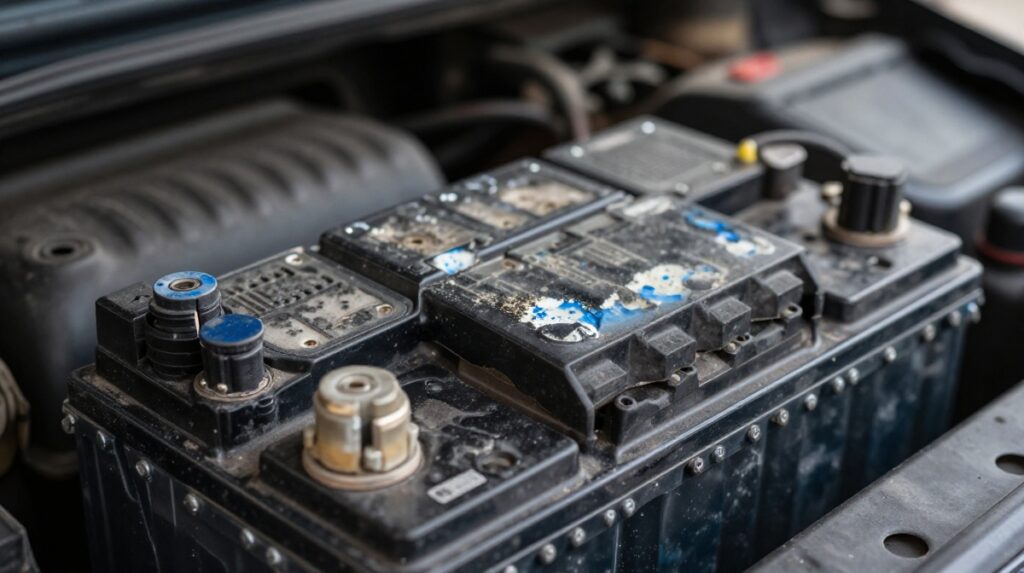
Let’s talk about what’s really going on inside that black box under your hood. A car battery is a chemical reaction in a box. Lead plates, sulfuric acid, and a slow, steady exchange of electrons that somehow cranks your engine.Over time, that reaction gets weaker. It’s not sudden. It’s a slow fade, like a phone battery that just doesn’t hold a charge anymore.
Here’s what speeds up that fade:
- Heat. It evaporates the internal fluid and speeds up corrosion. Cold weather doesn’t cause the damage, it just exposes a battery that was already weak.
- Short trips. A five minute drive to the grocery store doesn’t give your alternator enough time to fully recharge the battery.
- Vibration. Bad roads and loose battery trays loosen internal connections over time.
- Parasitic drain. A dome light left on overnight, a dash cam quietly sipping power 24/7. It adds up.
- Corrosion on terminals. That white crusty stuff on the battery posts blocks the connection and makes your battery work harder than it should.
None of this is exciting stuff. But knowing it changes how you treat your car.
Signs your battery is on its way out
This is the part I wish someone had told me before my parking lot fiasco. Your battery usually gives warnings. Small ones. Easy to ignore ones.
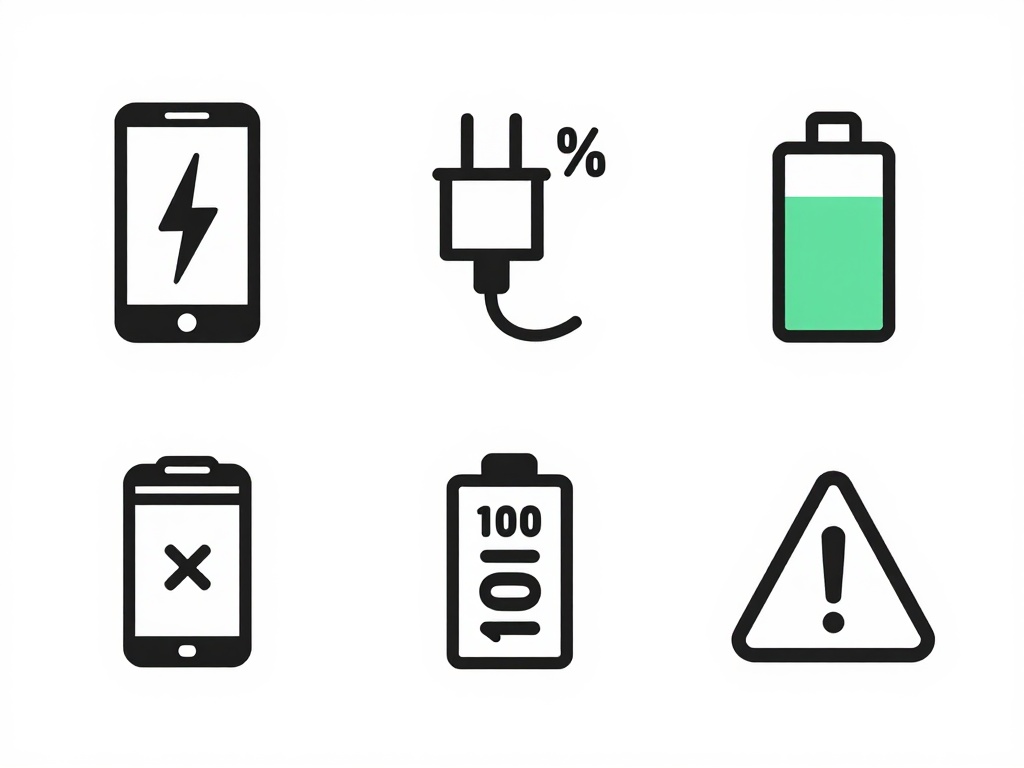
Here’s what to watch for:
- Engine cranks slower than usual before starting
- Dashboard lights look dimmer than normal
- The check engine or battery warning light comes on
- Electronics act strange, power windows moving slower, radio resetting on its own
- A slight sulfur or rotten egg smell near the battery (this one’s serious, get it checked immediately)
- The battery case looks swollen or bloated
Notice something slow starting your engine? Don’t ignore it. Your car is telling you to check the battery before it turns into a 6 AM emergency.
How climate changes the game
I mentioned this earlier, but it deserves its own section. People get it backwards constantly.
Heat does more damage to a car battery than cold ever will.Living somewhere hot, Arizona, Texas, Florida, shortens battery life faster than living somewhere freezing. The heat cooks the internal components and speeds up fluid loss.Cold weather works differently. Thick, cold oil and slower chemical reactions demand more cranking power, so a weak battery struggles even more.If you live somewhere with scorching summers, don’t be surprised if your battery taps out around the 2 to 3 year mark instead of 5. In a milder climate, you might genuinely get that full 5 year run, or longer.
My personal battery horror story
Back to that freezing parking lot. Here’s the full story, because I think it’s more useful than any generic tip list.My battery was almost exactly 3 years old. I’d noticed the car cranking a little slower for maybe two weeks before that morning. Did I do anything about it? Nope.I told myself it was just the cold and moved on with my life. Classic mistake.That morning, the car went silent. No struggle, just a weak click and then nothing.
I called roadside assistance (waited 40 minutes, fun), got a jump, sprinted through airport security, and made my flight. Got the battery replaced the next day.The mechanic showed me the corrosion on the terminals and said, “Yeah, this has been struggling for a while.” Thanks for telling me after the fact, universe.
The lesson: don’t ignore a slow crank. It’s a battery on its last legs, cold weather or not.
How to make your battery last longer
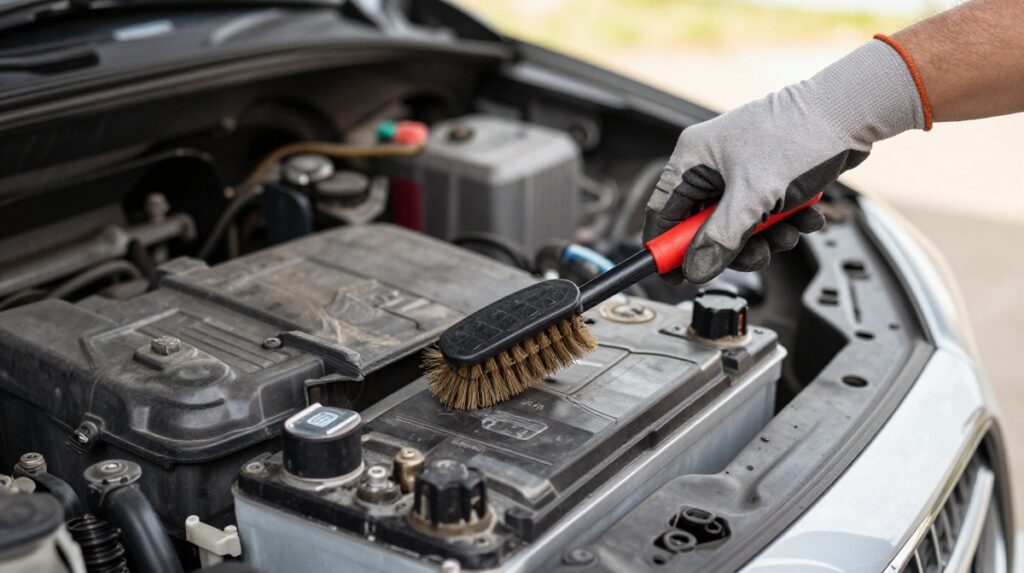
Now for the good stuff, the part where you actually get to do something instead of just worrying. Here’s what genuinely helps:
- Drive regularly, and drive long enough. A 20 minute drive at least once a week lets the alternator fully recharge the battery.
- Clean the terminals. A wire brush, some baking soda and water, five minutes of your time. That’s it.
- Turn off electronics before shutting off the engine. Lights, AC, radio, give the battery a break.
- Don’t let it sit unused for weeks. Going on vacation? Ask a neighbor to start the car once or twice, or use a trickle charger.
- Get it tested every year after the 2 year mark. Most auto parts stores do this for free in about 5 minutes.
- Watch for loose battery trays or worn cables. Vibration damage sneaks up on you.
None of this is glamorous. But it’s the difference between a battery that dies at 2.5 years and one that comfortably lasts 5.
How to test your battery at home
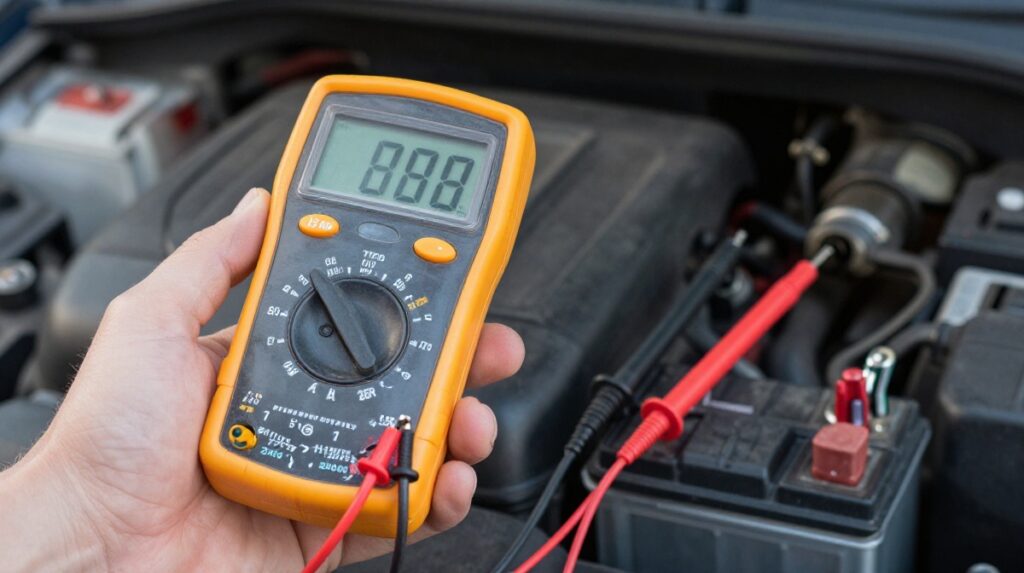
You don’t need to be a mechanic for this. Genuinely.
- Grab a multimeter (about $10 to $15 online or at any hardware store).
- Set it to DC voltage.
- With the car off, touch the probes to the positive and negative terminals.
- A healthy, fully charged battery reads around 12.6 volts.
- Start the car and check again. It should jump to somewhere between 13.7 and 14.7 volts while running, that’s your alternator doing its job.
Sitting below 12.4 volts at rest? Your battery is losing its charge and probably needs attention soon. Below 12 volts, that’s a battery on borrowed time.
When to replace vs. when to repair
Here’s an uncomfortable truth: you can’t repair a dying car battery. You can only slow the decline.Cleaning terminals, checking connections, using a trickle charger, these things extend life. They don’t reverse the aging process.
So when do you actually replace it?
- It’s past the 3 year mark and showing any warning signs
- A load test at an auto shop shows it’s below 70% capacity
- It’s swollen, leaking, or smells like sulfur
- You’ve jump-started it more than twice in a month
If none of those apply and it’s testing fine, don’t replace it just because of its age. A battery humming along happily at 4 years old doesn’t need to be swapped out just in case.
Best EV Car Gadgets in 2026: 10 Must-Have Accessories Every Electric Vehicle Owner Needs
Why Electric Vehicles Don’t Need Gearboxes?
AC vs DC Fast Charging – Which Is Better for EV Battery Life?
How long do car batteries last on average?
Most last 3 to 5 years, depending on climate, driving habits, and maintenance.
Do electric car batteries last as long as regular car batteries?
Different topic entirely. EV batteries use a different chemistry (lithium-ion vs. lead-acid) and typically last 8 to 15 years. This article covers the standard 12V lead-acid batteries in gas powered cars.
Can a car battery last 10 years?
It’s rare, but not impossible, especially with a mild climate, minimal short-trip driving, and regular maintenance. I wouldn’t count on it though.
Does jump-starting damage the battery?
Not usually, as a one-off. But repeated jump starts are a clear sign your battery is failing and needs replacing soon.
Why did my battery die so fast, like in 1 to 2 years?
Usually it’s extreme heat, a parasitic drain (something pulling power while the car’s off), or a manufacturing defect. Worth getting it checked under warranty if it’s that young.