Lithium Ion Battery for Motorhome: Costs, Sizing, and What to Avoid
You spend one night boondocking with a flat leisure battery, and you get it. That’s why so many RVers switch to lithium. A lithium ion battery for motorhome use isn’t a trendy upgrade. It fixes the two things that ruin off-grid trips: you run out of power too soon, and…
You spend one night boondocking with a flat leisure battery, and you get it. That’s why so many RVers switch to lithium. A lithium ion battery for motorhome use isn’t a trendy upgrade. It fixes the two things that ruin off-grid trips: you run out of power too soon, and then you wait forever for it to charge back up.
This guide covers what you need to decide if lithium fits your rig. How it stacks up against lead-acid and AGM. What it actually costs once you factor in the whole system. How to size a battery bank so you don’t get caught short. Installation quirks for US and European motorhomes. And the mistakes that trip up first-time buyers.
Table of Contents
What is a lithium ion battery for motorhome use, exactly?
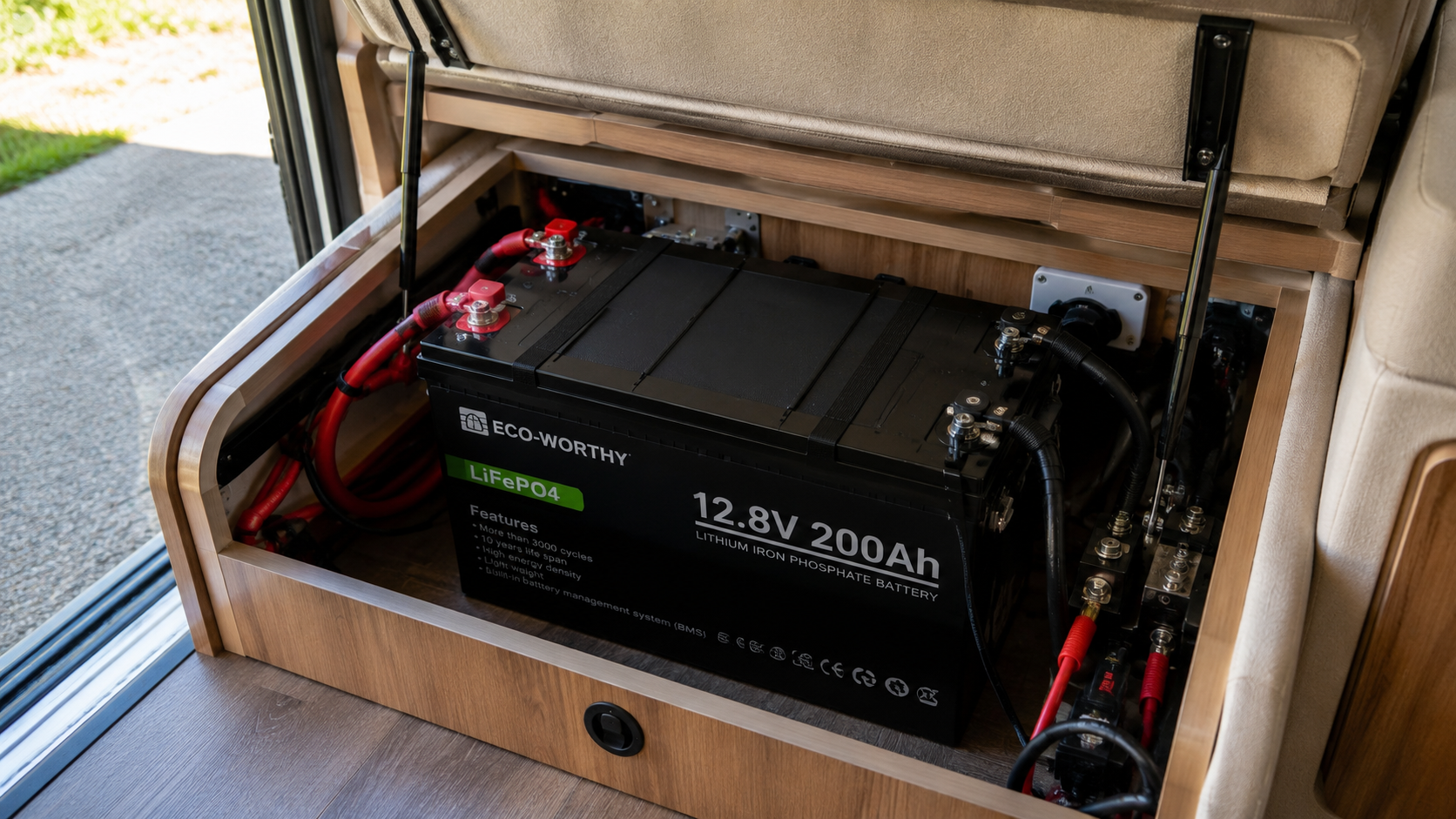
Most lithium batteries built for motorhomes use LiFePO4 (lithium iron phosphate) chemistry, not the lithium-cobalt cells in your phone or laptop. LiFePO4 cells weigh more individually, but they’re safer, more stable at high temperatures, and good for thousands of charge cycles instead of a few hundred.
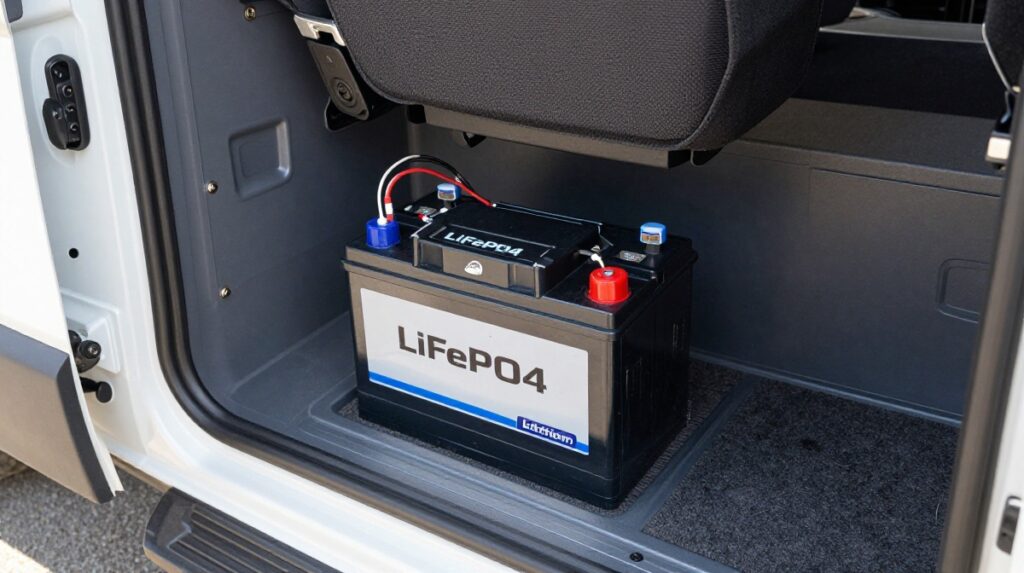
Quick answer: a motorhome lithium battery is a rechargeable 12V (sometimes 24V or 48V) power source using LiFePO4 chemistry. It runs your fridge, lighting, water pump, and inverter without shore power or the engine. Most units pack a Battery Management System (BMS) right into the case. This is the part doing the real work. It balances individual cells, stops overcharging, cuts power in extreme temperatures, and guards against short circuits.
Lithium vs. lead-acid vs. AGM: how do they really compare?
This is where most buyers get stuck. So here’s a straight comparison based on real-world use, not a marketing sheet.
| Feature | Lead-acid (flooded) | AGM | Lithium (LiFePO4) |
| Usable capacity | ~50% of rated | ~50-60% | ~95-100% |
| Cycle life | 300-500 cycles | 400-700 cycles | 2,000-5,000+ cycles |
| Weight (100Ah equivalent) | 28-30 kg | 27-30 kg | 12-14 kg |
| Charge time | Slow, multi-stage | Slow | Fast, accepts high current |
| Maintenance | Regular (topping up, venting) | Minimal | None |
| Cold weather performance | Poor below 0°C | Moderate | Needs BMS low-temp cutoff |
| Typical lifespan | 2-4 years | 3-5 years | 8-12 years |
| Upfront cost | Low | Medium | High |
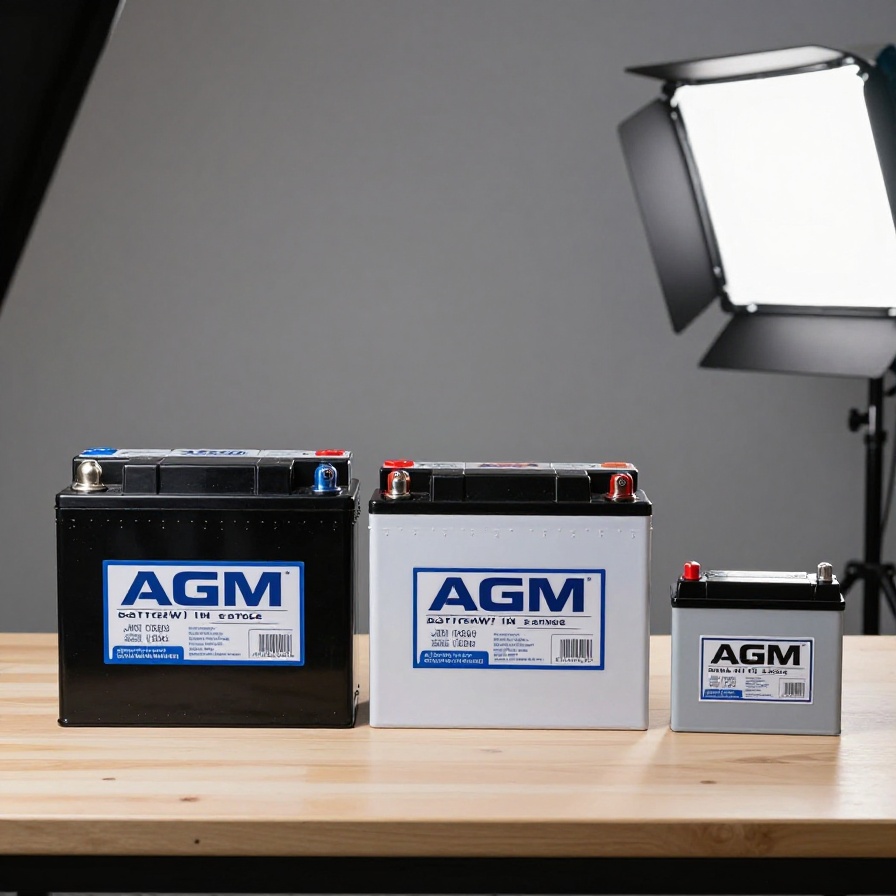
The usable capacity row is the one people skip past. A 100Ah lead-acid battery only hands you around 50Ah of safe power before it starts to degrade. A 100Ah lithium battery gives you nearly all of it. That’s why a smaller lithium battery often beats a bigger lead-acid bank once you’re actually parked somewhere with no hookup.
Is a lithium battery worth it for a motorhome?
Yes, if you camp off-grid a lot, run an inverter, or plan to keep the motorhome for 5 years or more. No, if you mostly park at sites with hookups and rarely pull heavy loads.
Here’s the honest breakdown.
Lithium makes sense if you:
- Boondock, wild camp, or use Aires and Stellplatz sites with no hookups
- Run an inverter for laptops, coffee machines, or a CPAP
- Have solar panels and want faster, more efficient charging
- Plan to keep the vehicle long enough for the cost to pay off
- Travel somewhere cold, with a battery and BMS rated for it
Lithium might not be worth it if you:
- Only stay at campsites with mains hookup
- Use the motorhome a few weekends a year
- Have a tight budget and no real capacity problem yet
Expect to pay 2 to 3 times more upfront than an equivalent AGM setup. But lithium lasts roughly 3 times longer and gives you double the usable capacity. Work out the cost per usable amp-hour per year, and lithium often comes out cheaper over the life of the battery.
American Chemical Society – Lithium Iron Phosphate
How to size your lithium battery bank correctly
Undersizing is the mistake almost everyone makes. Here’s a simple way to get it right.
Step 1: list your daily power draws. Add up watt-hours for everything you’ll run off-grid: fridge, lights, water pump, phone charging, inverter loads.
Step 2: add a buffer. Multiply your daily total by 1.2 to 1.3 to cover inefficiencies and the stuff you didn’t plan for.
Step 3: match it to battery capacity. Divide your buffered watt-hour total by your system voltage (usually 12V) to get the amp-hours you need per day.
Step 4: plan for autonomy. Want 2 to 3 days without recharging? Multiply your daily Ah number by that.
Take a couple running a 12V compressor fridge (50Wh average), LED lighting (20Wh), a water pump (10Wh), and charging a couple of phones (30Wh). That’s about 110Wh a day for the basics, light use by any measure. Add an inverter for a laptop and a coffee maker, and daily use can climb past 500-800Wh. That pushes you toward a 100-200Ah lithium bank if you want 2 days of autonomy.
Common mistakes when buying a motorhome lithium battery
- Ignoring the charging system. You buy a great battery, keep your old lead-acid-profile charger, and wonder why the lithium battery won’t charge properly. This is the top complaint, and it’s avoidable.
- Buying on price per Ah alone. Cheaper cells usually skimp on the BMS. That’s the part actually protecting your money.
- Skipping the continuous discharge rating. Run a big inverter? Confirm the battery handles the continuous amp draw, not just the peak number on the spec sheet.
- Overlooking warranty terms. A solid lithium battery carries an 8 to 10 year warranty. Anything under 3 to 5 years should give you pause.
- Ignoring weight and space. Lithium is lighter, sure. But the dimensions can differ from your old lead-acid unit. Measure your battery compartment before you buy.
More:
10 Proven Tips for Increasing EV Battery Life That Actually Work
Tesla Price in USA vs Europe: What Every Model Actually Costs in 2026
How Long Do Car Batteries Last? 5 Honest Truths I Learned the Hard Way
How long does a lithium battery last in a motorhome?
A quality LiFePO4 battery typically lasts 8 to 12 years, or 2,000 to 5,000 charge cycles. That easily outlasts lead-acid or AGM
Can I replace my motorhome’s lead-acid battery with lithium directly?
Often, yes, with a drop-in 12V unit. But confirm your charger, solar controller, and any battery-to-battery charger support a lithium charge profile before you swap it in.
Do lithium batteries work in cold weather?
They discharge reasonably well in the cold. Just don’t charge them below freezing unless the BMS has a low-temperature charge cutoff built in.
How much does a lithium battery for a motorhome cost?
Prices swing by capacity and brand, but plan on roughly 2 to 3 times the cost of an equivalent AGM battery. You’re paying for a longer lifespan and more usable capacity.
Is lithium safe to install myself?
Simple drop-in replacements are usually fine for a DIY job. Bigger systems, new wiring, inverters, or multiple batteries wired in parallel? Get a qualified auto-electrician to install or at least check it.