
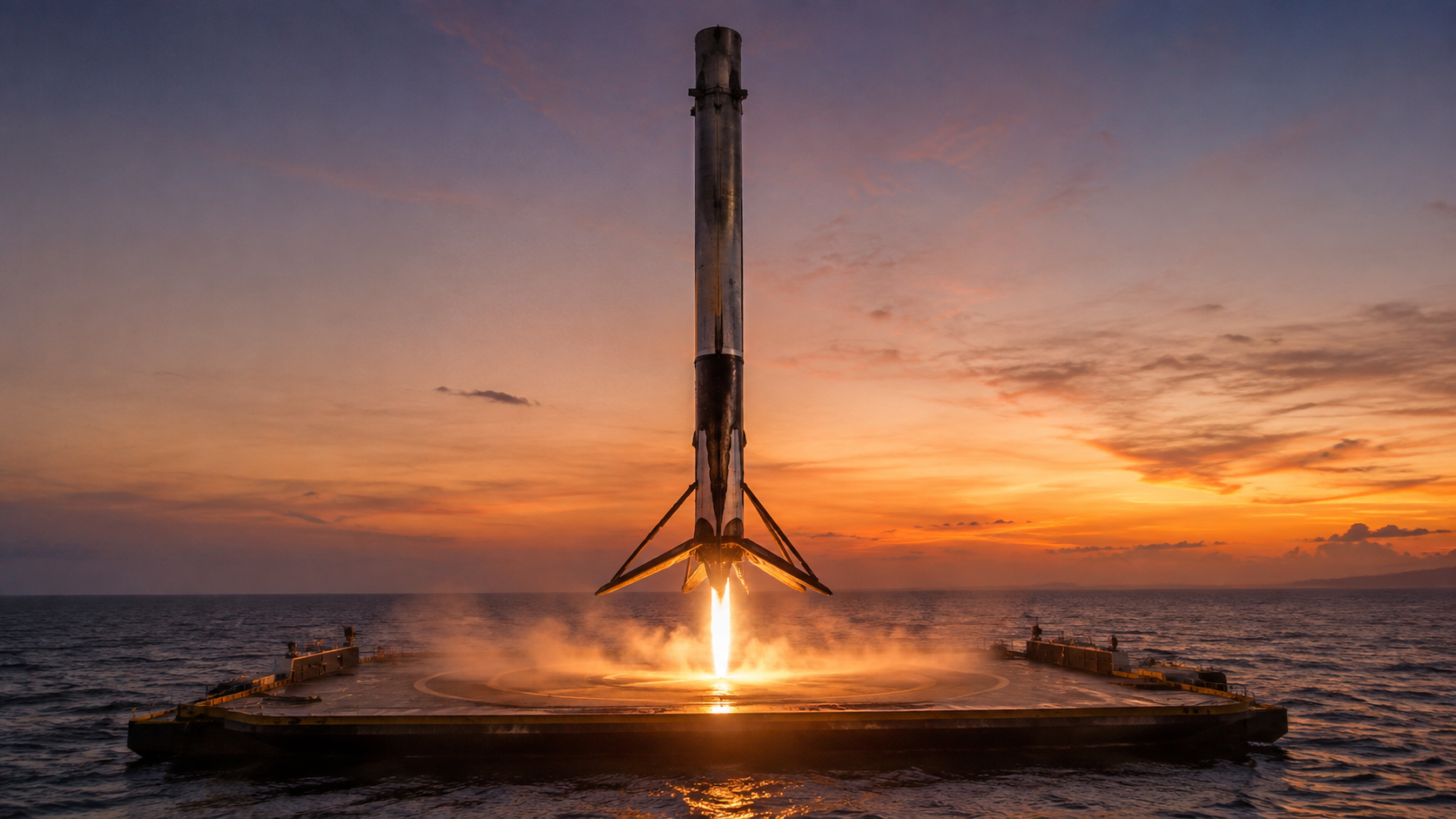
Falcon 9 Launch Sequence Explanation: Every Step From Countdown to Orbit
Watching a Falcon 9 launch on a livestream is one thing. Understanding what’s actually happening at each stage of the countdown is another. You’ve heard the commentator rattle off “MECO,” “Max Q,” “engine chill.” This guide breaks down the whole Falcon 9 launch sequence in plain language, from propellant loading…
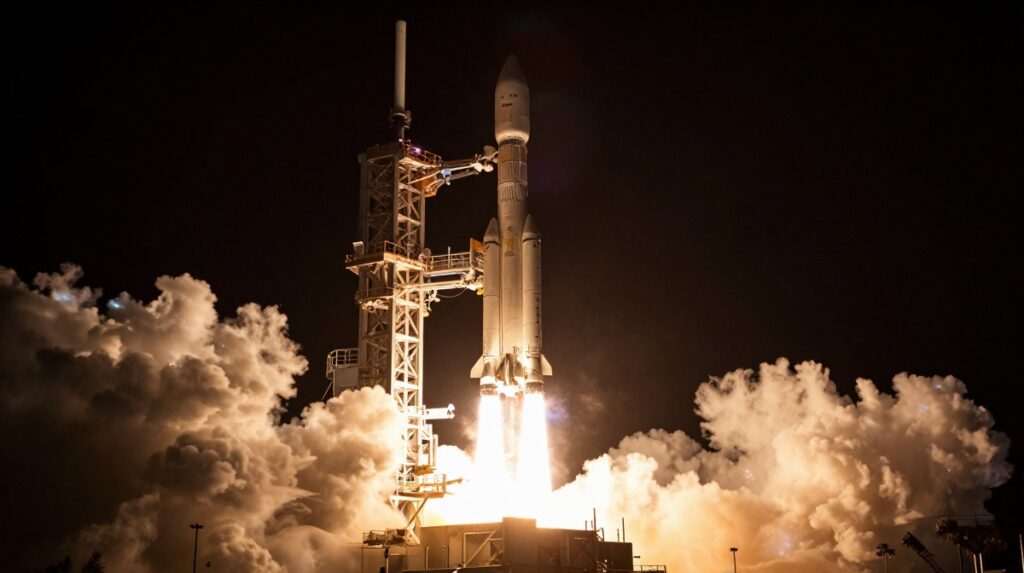
Watching a Falcon 9 launch on a livestream is one thing. Understanding what’s actually happening at each stage of the countdown is another.
You’ve heard the commentator rattle off “MECO,” “Max Q,” “engine chill.” This guide breaks down the whole Falcon 9 launch sequence in plain language, from propellant loading hours before liftoff to the second stage delivering its payload into orbit.
Table of Contents
What is the Falcon 9 launch sequence?
Short answer: it’s the precise, scripted series of events, starting hours before liftoff and running through orbital insertion, that gets the rocket from sitting still on the pad to space. Fueling, engine ignition, stage separation, and (on most missions) a booster landing.
SpaceX runs this the same way for nearly every mission. Doesn’t matter if the payload is a batch of Starlink satellites, a NASA cargo run, or a national security payload. Timing shifts slightly mission to mission. The structure doesn’t.
Falcon 9 countdown timeline: hours before liftoff
Ground teams are deep into launch operations long before the clock hits zero.
Vehicle and pad preparation
Before any fueling starts, the rocket’s already been through integration. Stages inspected, stacked, moved to the pad. That process begins long before the countdown clock starts, with stages arriving at the launch site, getting inspected, and assembled, either vertically on the pad or horizontally in a processing facility before rolling out, which is how SpaceX handles Falcon 9.
Propellant loading
This is where the sequence gets interesting. It’s also a big reason Falcon 9 performs the way it does.
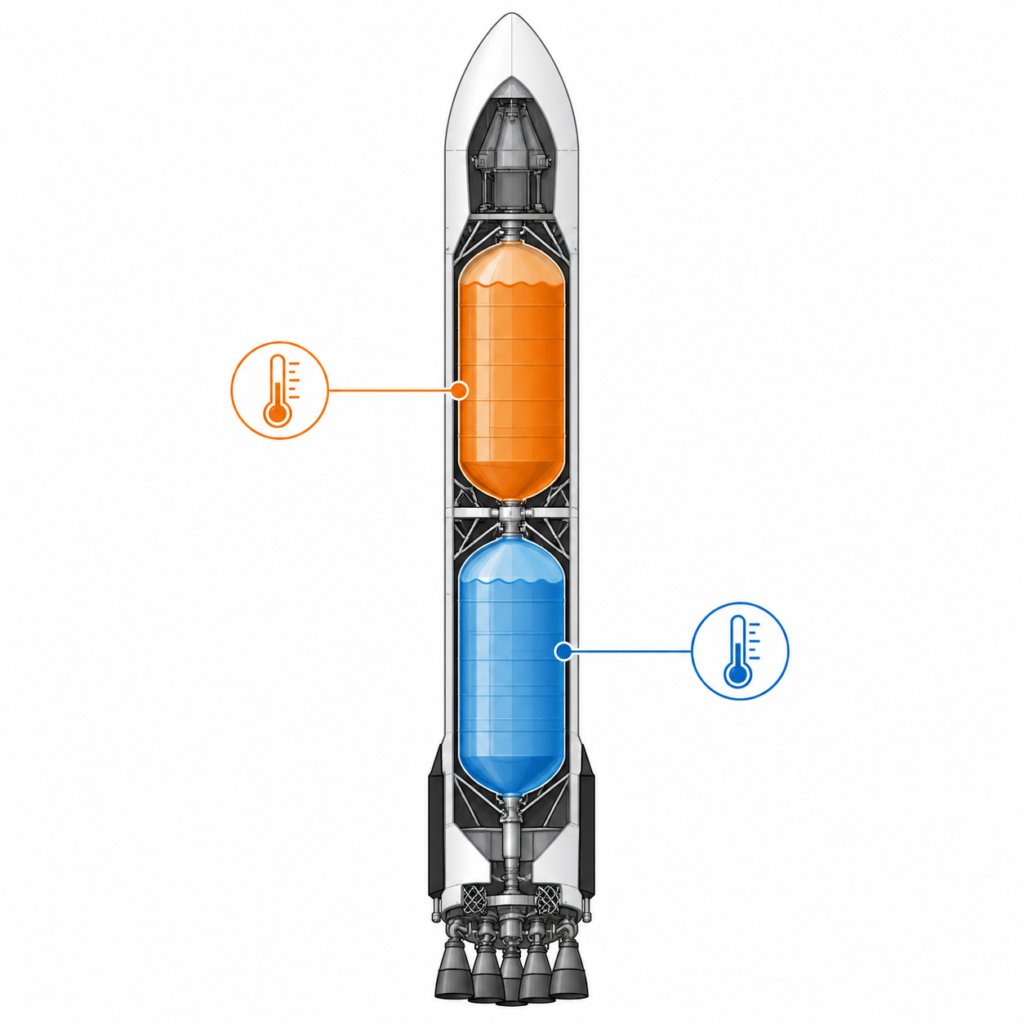
- RP-1 kerosene loads first. It sits at normal temperature, so the process is simple: the first stage loads this refined jet fuel at ambient temperature, and Falcon 9 carries roughly 123,000 kg of it across both stages.
- Liquid oxygen loads at the same time. LOX is cryogenic, sitting around -183°C, and it keeps boiling off. So crews keep topping it up right until launch.
- SpaceX sub-cools its LOX down to about -207°C. Denser, which means more propellant fits in the same tank. It’s a quiet advantage, and it’s part of why Falcon 9 outperforms competitors flying similarly sized vehicles.
This is also why Falcon 9 launches tend to be punctual within their windows. Cryogenic propellant doesn’t sit around waiting on a delayed countdown the way kerosene can.
The terminal countdown: the final minutes
Once fueling’s well underway, the launch hits what’s called the terminal count. Every minute from here is scripted, second by second.
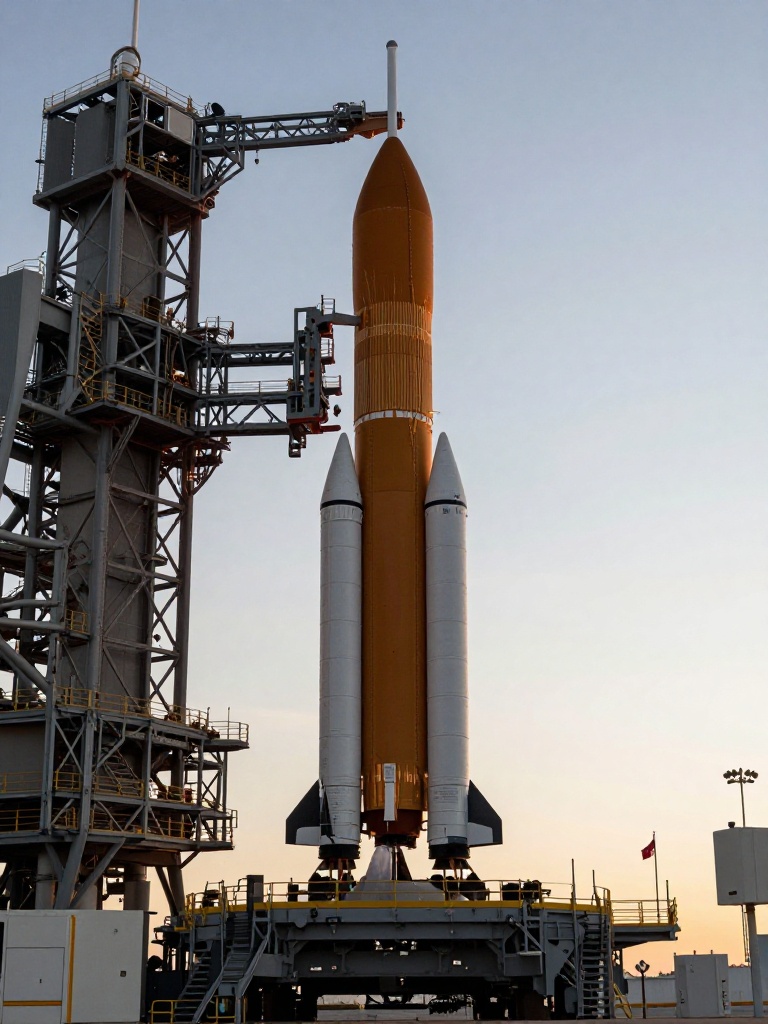
Here’s a typical Falcon 9 terminal countdown, based on SpaceX’s published mission timelines. At T-minus 10 seconds, engine chill begins. At T-minus 7, the payload switches to internal power. At T-minus 2, the Range Control Officer verifies the range is go. At T-minus 1:30, the SpaceX Launch Director gives the final go. At T-minus 1, the flight computer runs final checks and pressurizes the tanks. At T-minus 3 seconds, the engine controller starts the ignition sequence. At T-0, liftoff.
| Time (T-minus) | Event |
| 10 seconds | Engine chill begins |
| 7 seconds | Payload switches to internal power |
| 2 seconds | Range officer confirms “go” |
| 1 min 30 sec | Launch Director gives final “go” |
| 1 second | Flight computer runs final checks, tanks pressurize |
| 3 seconds | Engine ignition sequence starts |
| 0 | Liftoff |
Why engine chill matters
The engines need to match the temperature of the cryogenic propellant running through them before they fire. Skip that step, and you risk thermal shock wrecking engine components at the exact moment they need to work.
The final go calls
Two separate people sign off before Falcon 9 launches. The Range Control Officer confirms the flight path is clear of aircraft and other hazards. The SpaceX Launch Director confirms the vehicle and mission are ready. Either one can call a hold.
Max Q – Maximum Dynamic Pressure
About a minute in, the rocket hits Max Q, the point of peak mechanical stress from speed combined with thickening air resistance. At T-plus 1:08, Falcon 9 experiences Max Q. Engines throttle down briefly to handle it, then throttle back up once the rocket’s through.
MECO – Main engine cutoff and stage separation
The first stage finishes its job in about two and a half minutes.
- MECO (main engine cutoff) hits at T-plus 2:21, when the first stage’s 9 engines shut down.
- Stage separation follows seconds later, at T-plus 2:24.
- The second stage engine ignites almost immediately after, at T-plus 2:32, to keep pushing toward orbit.
From here, the mission splits into two threads. The second stage keeps climbing. The first stage starts heading home..
How the Falcon 9 booster lands itself
This is what made Falcon 9 different from every rocket before it. Still the thing people ask about most the first time they watch a launch.
After separation, the first stage runs through up to 3 burns, depending on the mission and how far the booster needs to travel back:
- Boostback burn, at T-plus 2:42, repositions the booster toward the landing site.
- Entry burn, at T-plus 6:31, slows the booster as it hits thicker atmosphere.
- Landing burn, at T-plus 7:38, handles the final deceleration right before touchdown.
The booster lands on a ground pad (Landing Zone 1 or 2 at Cape Canaveral) or on a drone ship out at sea, depending on the mission. Heavier payloads or higher orbits usually mean a drone ship landing. There’s just not enough leftover fuel to fly all the way back.
Second stage: orbit insertion and payload deployment
While the booster’s landing itself, the second stage finishes its part.
- SECO (second stage engine cutoff) hits at T-plus 9:02, once the vehicle reaches its target trajectory.
- Payload separation follows at T-plus 9:37.
- For crewed or scientific payloads like Dragon, solar arrays deploy at T-plus 11 minutes. About 2 hours and 19 minutes later, the guidance and navigation control bay door opens.
Starlink deployments look different. The satellites release as a group, then use their own ion thrusters to spread out and raise their orbits over the following days.
You can learn more about falcon 9 technology from the : SpaceX — Falcon 9 (official rocket page)
Where to watch a Falcon 9 launch in the US
Researching the sequence because you want to see one in person? Here’s what matters.
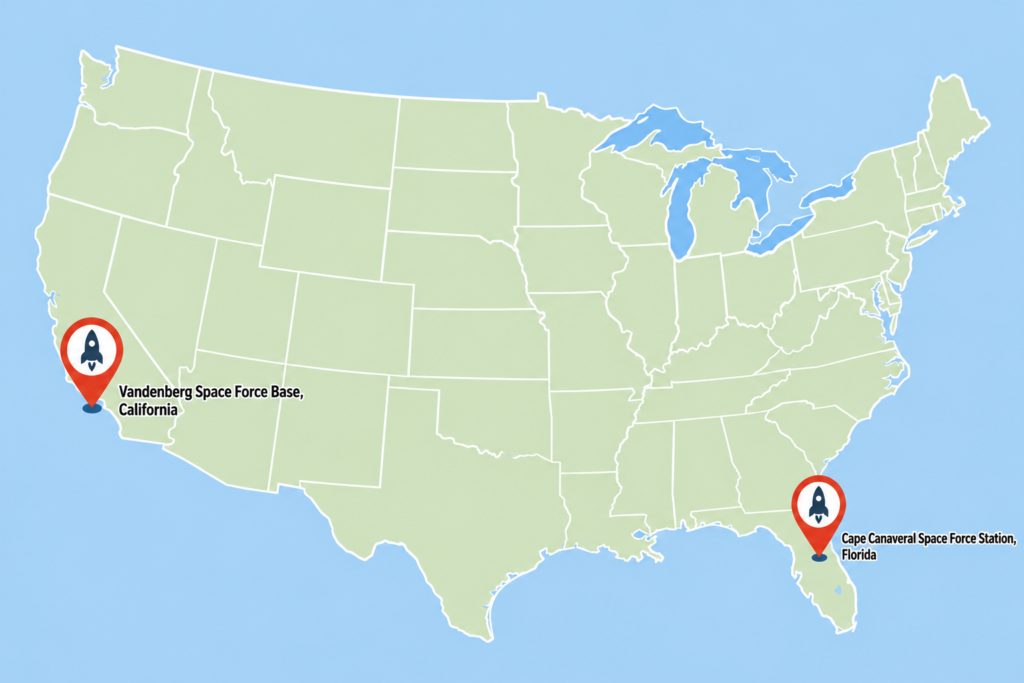
Falcon 9 launches from 2 US sites:
- Cape Canaveral Space Force Station / Kennedy Space Center, Florida, the busiest site, with public viewing at Playalinda Beach, Jetty Park, and the KSC Visitor Complex.
- Vandenberg Space Force Base, California, which handles polar-orbit missions like most Starlink launches, viewable from Surf Beach and Ocean Avenue in Lompoc.
More :
Chinese Satellite Pulverizes Starlink: What the 2-Watt Laser Test Really Proved
Skyroot Vikram-1 Launch: Inside India’s First Private Orbital Rocket
Best EV Car Gadgets in 2026: 10 Must-Have Accessories Every Electric Vehicle Owner Needs
10 Proven Tips for Increasing EV Battery Life That Actually Work
One Comment
Comments are closed.