Skyroot Vikram-1 Launch: Inside India’s First Private Orbital Rocket
On July 18, 2026, a Hyderabad-based startup did something no private company in India had ever done before: it put a rocket into orbit. Skyroot Aerospace’s Vikram-1 lifted off from the Satish Dhawan Space Centre in Sriharikota, carrying two small satellites and eight years of engineering work behind it. If…
On July 18, 2026, a Hyderabad-based startup did something no private company in India had ever done before: it put a rocket into orbit. Skyroot Aerospace’s Vikram-1 lifted off from the Satish Dhawan Space Centre in Sriharikota, carrying two small satellites and eight years of engineering work behind it.
If you’ve been searching for details on the Skyroot Vikram-1 launch what the rocket looks like, how the mission went, or why it matters for India’s space industry this guide breaks it all down. You’ll learn about the rocket’s design and stages, the mission itself, the people behind it, and what it means for the future of private spaceflight in Asia, and beyond.
What Is Vikram-1?
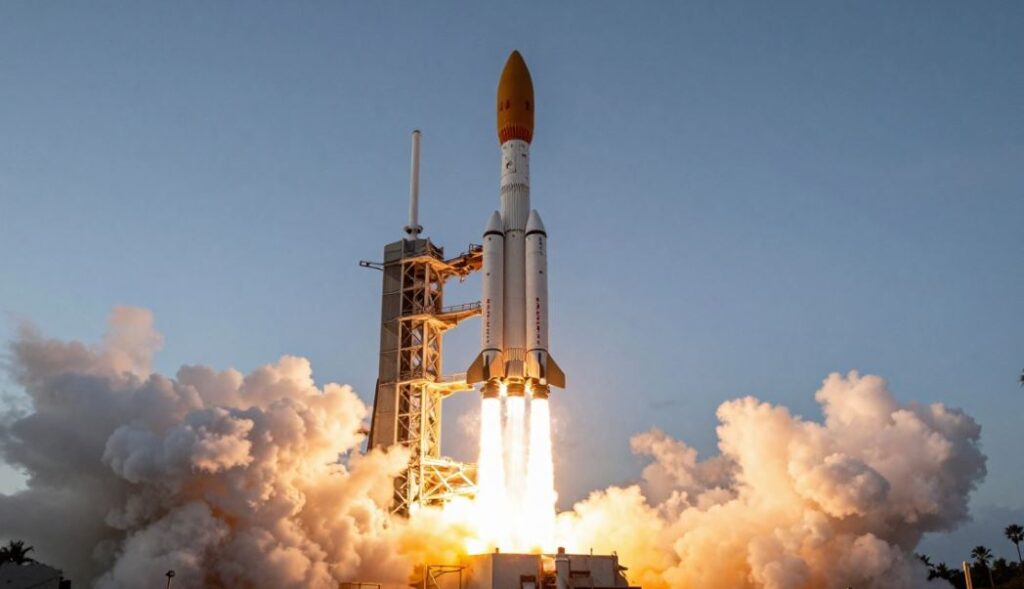
Vikram-1 is a four-stage, expendable orbital launch vehicle built by Skyroot Aerospace, a private Indian space company founded in 2018 by former ISRO scientists Pawan Kumar Chandana and Naga Bharath Daka.
The rocket is named after Vikram Sarabhai, widely regarded as the father of India’s space program — a fitting tribute, since Skyroot itself is trying to do for India’s commercial space sector what Sarabhai’s generation did for its government-led one.
Quick facts about Vikram-1:
| Spec | Detail |
| Height | Roughly 20 meters (about seven stories) |
| Diameter | 1.7 meters |
| Stages | 4 (three solid-fuel, one liquid kick stage) |
| Payload capacity | Around 350 kg to Low Earth Orbit |
| First flight | July 18, 2026 (“Mission Aagaman”) |
| Launch site | Satish Dhawan Space Centre, Sriharikota |
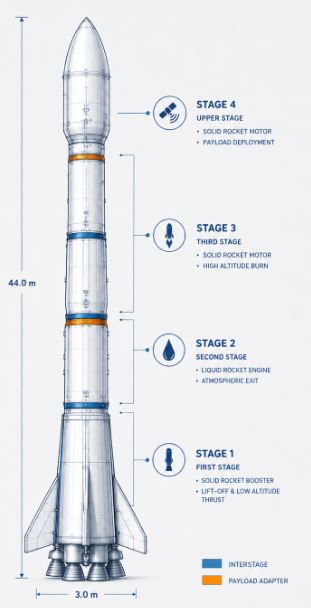
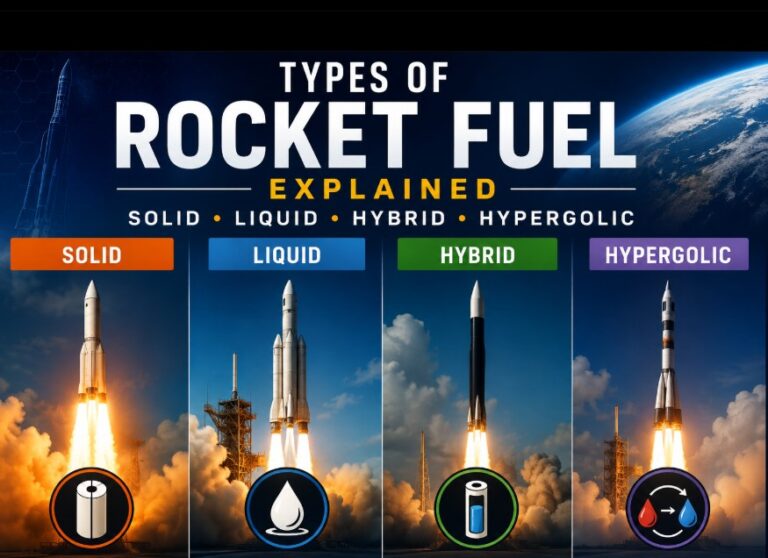
The first three stages run on solid propulsion a design choice Skyroot has favored since its earlier Vikram-S demonstrator, largely because solid motors have fewer moving parts and a simpler failure profile. The fourth stage is a liquid-fueled “kick stage” used for precise orbital insertion and any adjustment maneuvers once the payload separates from the lower stages.
The Vikram-1 Launch: What Actually Happened
The mission, called Mission Aagaman (Sanskrit for “arrival”), had a launch window that opened July 12 and stretched into early August, depending on weather and technical readiness. Skyroot ultimately targeted July 18 at 11:30 AM IST.
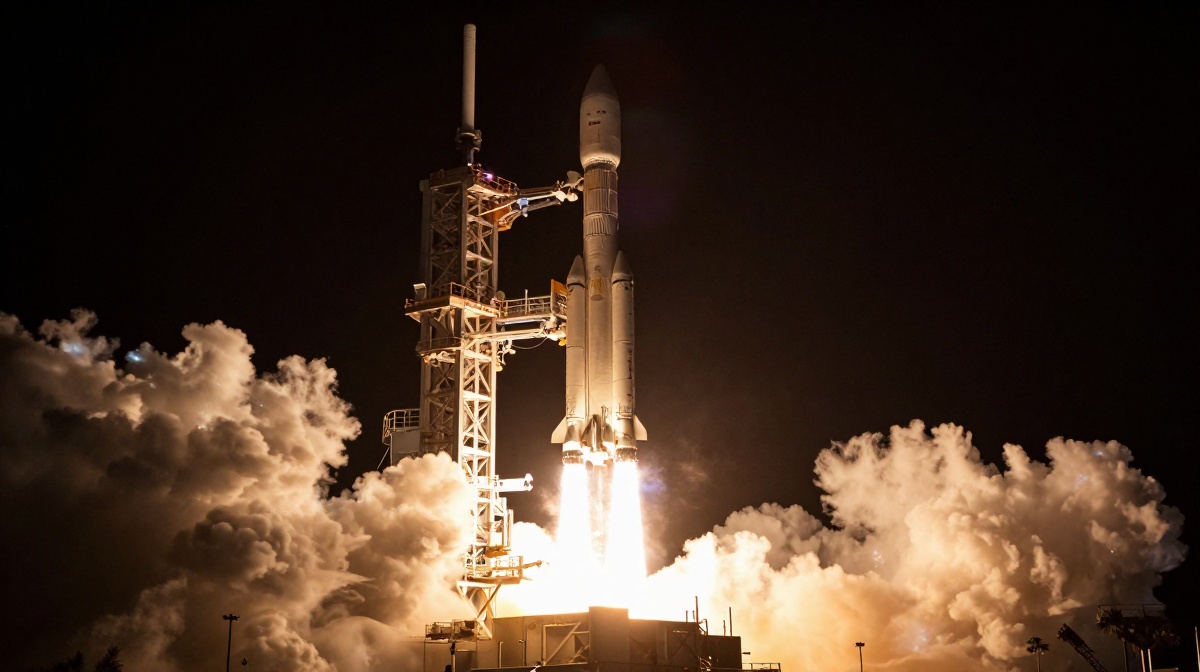
Liftoff was delayed by about 35 minutes after a technical issue turned up during the final countdown, a routine kind of hold in early-stage rocket testing. Once the rocket did launch, its three solid-fuel stages performed as planned, followed by six minutes of burn time on the liquid kick stage. Skyroot confirmed the vehicle reached its target low Earth orbit of roughly 450 kilometers within about 15 minutes of liftoff.
Two cubesats rode along on this test flight: one built in-house by Skyroot, and one from fellow Indian startup Grahaa Space.
Why the delay and cautious tone mattered:
first flights of new rockets fail more often than they succeed that’s true for SpaceX, Rocket Lab, and virtually every orbital launch company in history. Skyroot’s own leadership acknowledged this risk publicly before launch, framing Vikram-1’s debut as both a technology demonstration and a data-gathering mission rather than a guaranteed success. That the flight worked on the first attempt is a genuinely rare outcome in the launch industry.
Why This Launch Is a Big Deal
Here’s the short answer for anyone skimming: the Vikram-1 launch made India the third country in the world after the United States and China with a private company capable of reaching orbit.
That distinction matters for a few reasons:
- Market timing. The small-satellite launch market has far more demand than supply right now. Companies building constellations for communications, earth observation, and IoT often wait months for a launch slot. A new, capable player adds real capacity to that market.
- National space strategy. India’s government has spent the last several years opening its space sector to private companies through reforms and the establishment of IN-SPACe (Indian National Space Promotion and Authorisation Centre), which coordinates private access to ISRO facilities. Vikram-1’s success is a visible payoff of that policy shift.
- Manufacturing scale. In late 2025, Skyroot opened its “Infinity Campus” in Hyderabad, a roughly 200,000-square-foot facility designed to build one orbital rocket a month. A successful maiden flight is what makes that production ambition credible to customers and investors.
How Vikram-1 Compares to Other Small Launchers
Vikram-1 sits in the small-satellite launch vehicle category, competing conceptually with vehicles like Rocket Lab’s Electron or Firefly’s Alpha, though direct payload and cost comparisons are still developing as Skyroot moves from test flight to commercial cadence.
What sets Vikram-1 apart:
- Solid-fuel-heavy design — Most competitors lean on liquid propulsion throughout. Skyroot’s solid-stage-first approach trades some performance flexibility for simpler, more reliable hardware and faster manufacturing.
- Carbon composite structures — Skyroot’s automated composite manufacturing process cuts stage weight significantly compared to traditional steel casings, which helps payload capacity per launch.
- Home-field advantage — Operating out of Sriharikota with ISRO and IN-SPACe support gives Skyroot infrastructure and regulatory access that newer market entrants elsewhere don’t have.
From Vikram-S to Vikram-1: A Quick Timeline
Understanding Vikram-1 is easier with some context on how Skyroot got here.
2020 – Skyroot completed a full-scale test firing of a solid rocket stage, the first time a private Indian company had built and tested one entirely in-house.
November 2022 – Skyroot launched Vikram-S, a single-stage suborbital rocket, in a mission called “Prarambh” (beginning). It reached an apogee of about 89.5 km and made Skyroot the first private Indian company to send a rocket to space.
October 2023 – The company unveiled the Vikram-1 launch vehicle design at its MAX-Q headquarters in Hyderabad.
November 2025 – Prime Minister Narendra Modi unveiled the flight-ready Vikram-1 configuration during the inauguration of Skyroot’s new Infinity Campus.
July 18, 2026 – Vikram-1 completed its debut orbital flight, Mission Aagaman.
Each of these steps built directly on the last. The solid-stage testing from 2020 became the propulsion backbone of Vikram-1’s lower stages, and the suborbital Vikram-S flight in 2022 validated the systems and ground operations that scaled up into a full orbital vehicle.
What Comes Next for Skyroot
A successful debut flight is a milestone, not a finish line. Watch for these next steps:
- Vikram-2 development – a larger four-stage vehicle designed to carry roughly 900 kg to orbit, aimed at bigger satellite constellations.
- Increased launch cadence – the Infinity Campus was built with monthly production capacity in mind, so expect Skyroot to push toward a more regular launch schedule rather than one-off missions.
- Commercial contracts – expect announcements of paying customers, both domestic and international, now that Vikram-1 has flight heritage.
The Vikram-1 launch is one of those moments that’s easy to undersell in a headline but hard to overstate in significance. A company that didn’t exist a decade ago just joined an extremely short list of private organizations capable of reaching orbit on their own hardware on essentially their first real attempt.
Whether you’re tracking this as a space enthusiast, an investor watching India’s private space sector, or someone curious about where the next wave of satellite launches will come from, Vikram-1 is worth bookmarking. Skyroot’s next moves Vikram-2, a faster launch cadence, and new commercial contracts will show whether this debut was a lucky first flight or the start of something much bigger.