
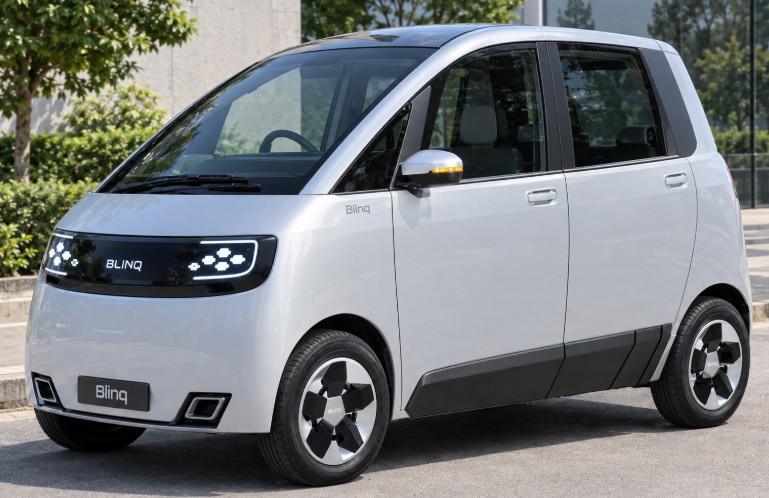
Blinq Ryde: Amazing ₹4 Lakh EV With a 2-Minute Battery Swap
Dreaming of an electric car but put off by the hefty price tag? Imagine an EV that costs less than half of traditional petrol cars and offers groundbreaking features. This article dives deep into Blinq Mobility’s ambitious venture, exploring their 4 lakh rupee EV car that promises to redefine affordable electric mobility in India.
Blinq Mobility is challenging the status quo with their innovative approach to electric vehicles, aiming to make EVs accessible to the masses. We’ll uncover the secrets behind their incredibly low price, the revolutionary battery-swapping technology, and whether this game-changer lives up to its promises.
The 4 Lakh Rupee EV car
The Indian car market often sees petrol cars starting around 6 lakh rupees, with electric vehicles typically commanding a premium of at least 10 lakh rupees. Blinq Mobility shatters these expectations by introducing an EV car priced at an astonishing 4 lakh rupees. This price point alone makes it India’s cheapest electric car, challenging the perception that EVs are a luxury.
You might assume such a low price means sacrificing essential features or passenger capacity. However, the Blinq RYDE defies these assumptions. It comfortably accommodates four people, including the driver, and boasts modern amenities like a touchscreen, automatic AC, reverse camera, ABS, and EBD. Available in a vibrant palette of 10 colors, this car proves that affordability doesn’t mean compromise.
Battery Swap Technology
One of the biggest hurdles for EV adoption has been charging time. While conventional EVs can take hours to charge, Blinq Mobility claims an astonishing two-minute charging time for their vehicle. This seemingly impossible feat is achieved through a revolutionary battery-swapping system, a concept inspired by EV scooters but now applied to cars.
Instead of waiting for a battery to recharge, users can simply swap it out for a fully charged one at designated stations. This “battery decoupling” technology, as it’s technically known, minimizes downtime, allowing drivers to get back on the road almost instantly. The idea stems from feedback from Ola and Uber drivers who felt charging time directly impacted their income.
Innovation and Vision
Blinq Mobility, the company behind this groundbreaking EV, is a relatively new player founded in 2024 by just two individuals. Their manufacturing facility is located in Gurugram, Haryana. The company’s genesis lies in a simple yet powerful question: if battery swapping works for scooters, why not for cars? This curiosity fueled the development of a car where batteries can be changed “in the blink of an eye,” hence the company’s name.
The founders, Nikesh Visist and Ankit Kumar, bring a wealth of expertise to the table. Nikesh, an IIT Delhi alumnus, has a background in battery technology, having served as CTO at Vetmoken Technologies. Ankit, who previously worked at Tesla, brings invaluable experience in battery ramps and related EV infrastructure. Their combined knowledge and vision have laid the foundation for Blinq Mobility.
Blinq RYDE Features
Despite its low price, the Blinq RYDE is packed with features that make it a compelling option. The car offers a practical range of 250 km on a single charge, making it suitable for both city commutes and longer journeys. The two-minute battery swap ensures you’re never stranded for long, a significant advantage over traditional charging.
The vehicle also prioritizes safety and convenience with features like a touchscreen infotainment system, automatic climate control, a reverse camera for easy parking, and essential safety systems like ABS and EBD. Furthermore, Blinq Mobility has paid close attention to waterproofing, ensuring the car can withstand submersion in water for up to 30 minutes without damage.
Blinq RYDE’s Potential and Challenges
Blinq Mobility offers its cars in two models: the Rite Family for personal use, priced at 4 lakh rupees, and the Rite Fleet for commercial purposes like taxis, costing up to 5 lakh rupees. This pricing strategy directly competes with entry-level petrol cars like the Maruti Alto and S-Presso, while significantly undercutting other EVs like the MG Comet. The company’s revenue model relies on car sales and battery subscriptions, a “Battery-as-a-Service” approach that further reduces the upfront cost of the car.
Conclusion
Blinq Mobility’s entry into the Indian EV market with the RYDE is a bold statement, democratizing electric vehicle ownership. While practical challenges like widespread battery-swapping infrastructure need to be addressed, this 4 lakh rupee EV offers a glimpse into a future where sustainable transportation is accessible to everyone. It’s a development worth watching closely as Blinq Mobility navigates the road ahead.
More:
JSW Jetour T2 SUV: India’s Next Big 4×4 SUV Set to Challenge the Thar
2 Comments