Our 5S Journey: From the Shop Floor to NCQC India 2025
In this article, I will share our 5S journey, the improvements we implemented on the shop floor, and our experience of taking these activities to NCQC India 2025.
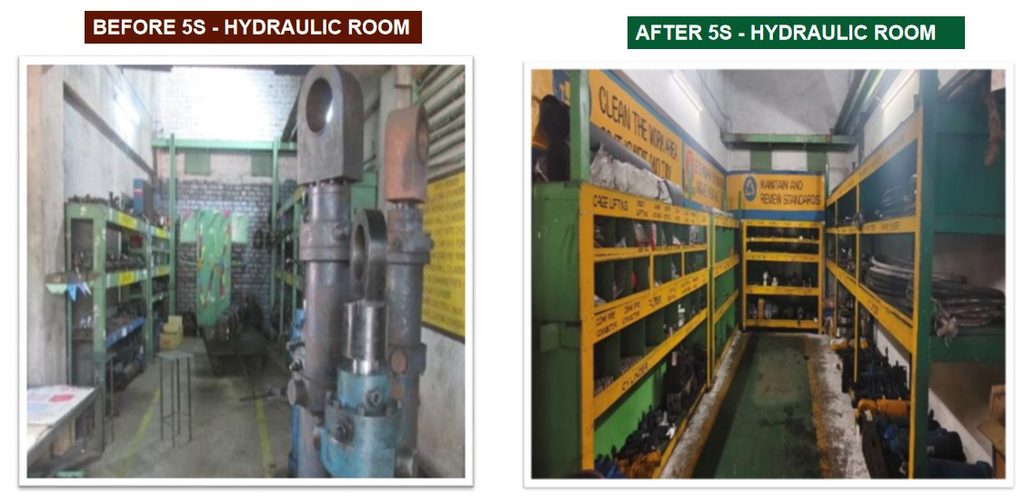
Before implementing 1S, we prepared a 5S layout for our department and divided it into 22 designated areas. Our 5S implementation area was identified as the Hydraulic Service Room. A 5S team was formed, and our organization provided 5S training to improve our understanding of the concept. Our 5S organizational structure consisted of the Zonal Head, 5S Zonal In-charge, 5S Area Leader, and 5S Area Members. After completing the initial preparations, we started implementing 5S in our area. Before beginning the activities, we took photographs of the Hydraulic Service Room
Initial Photos
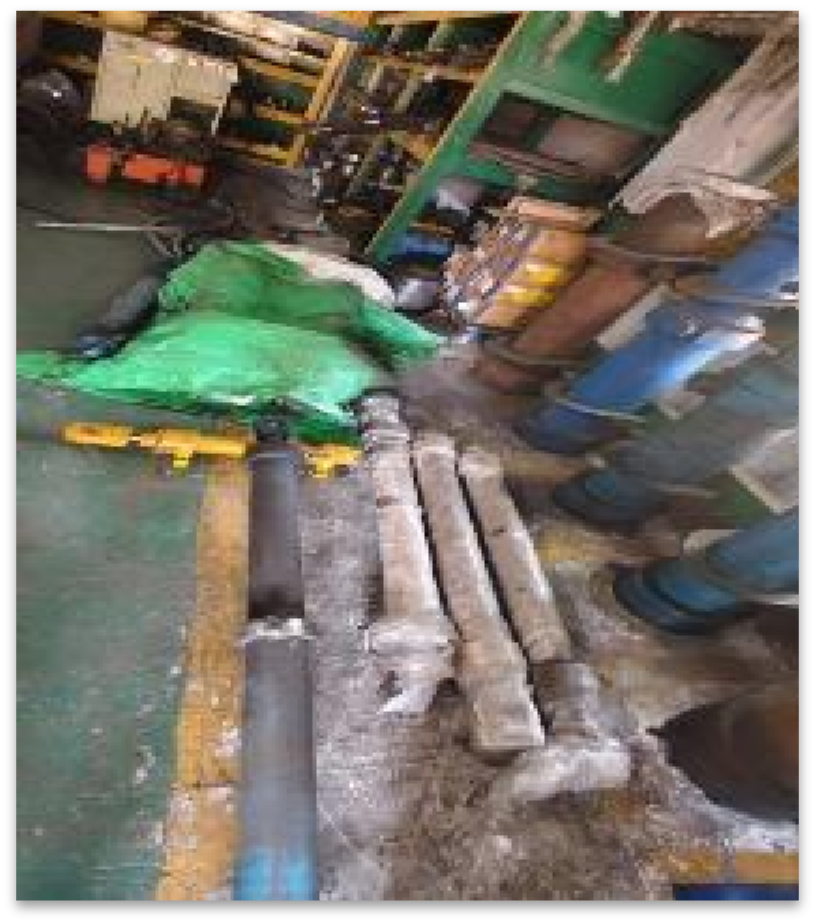
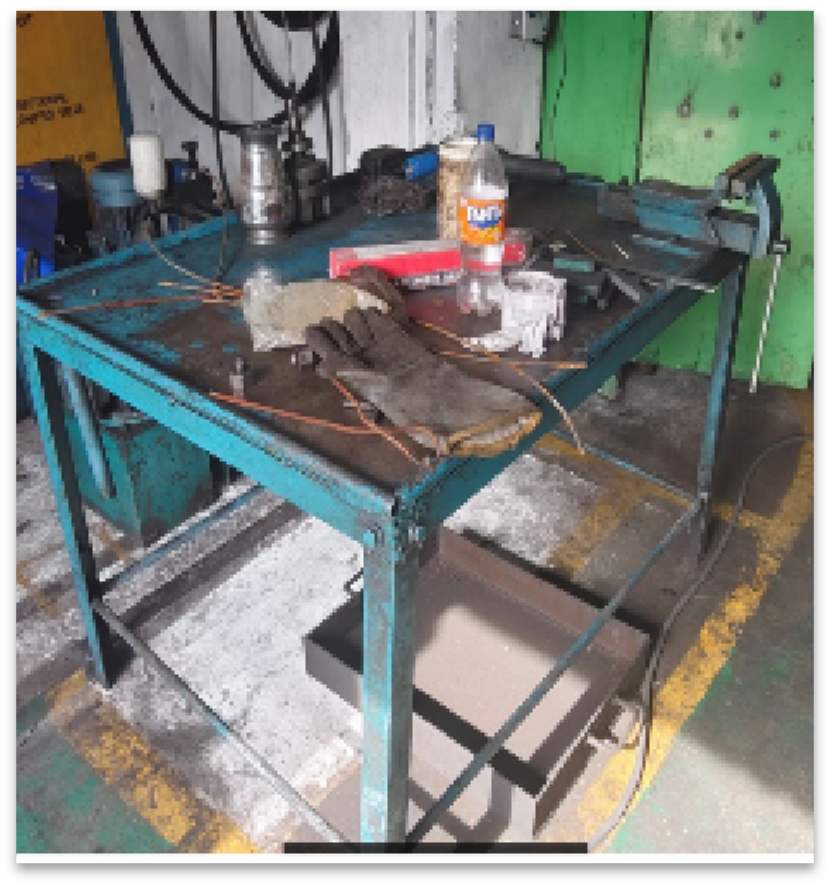
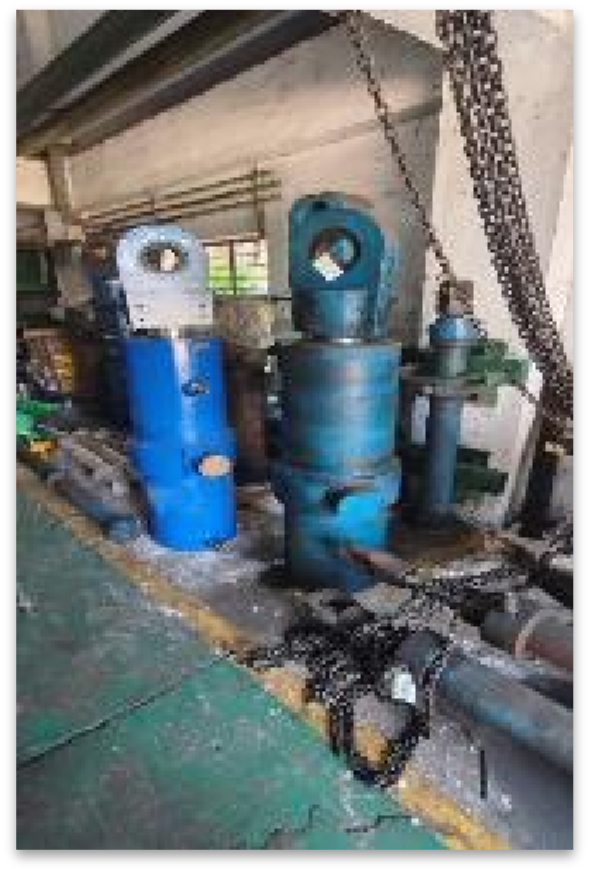
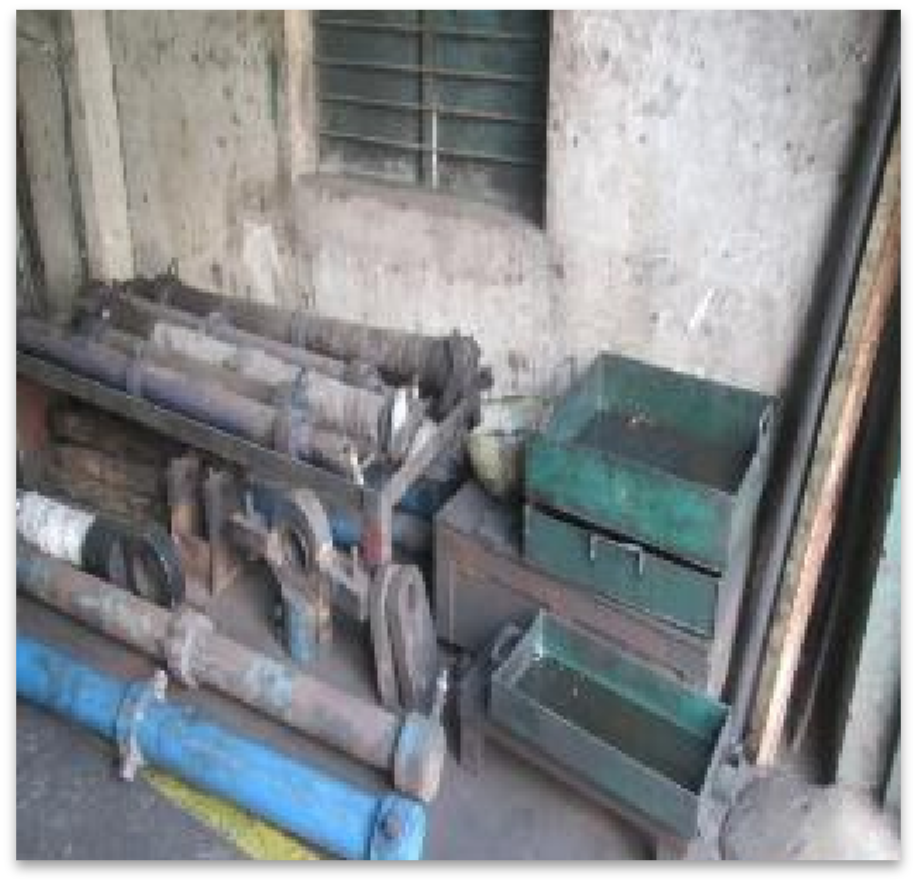
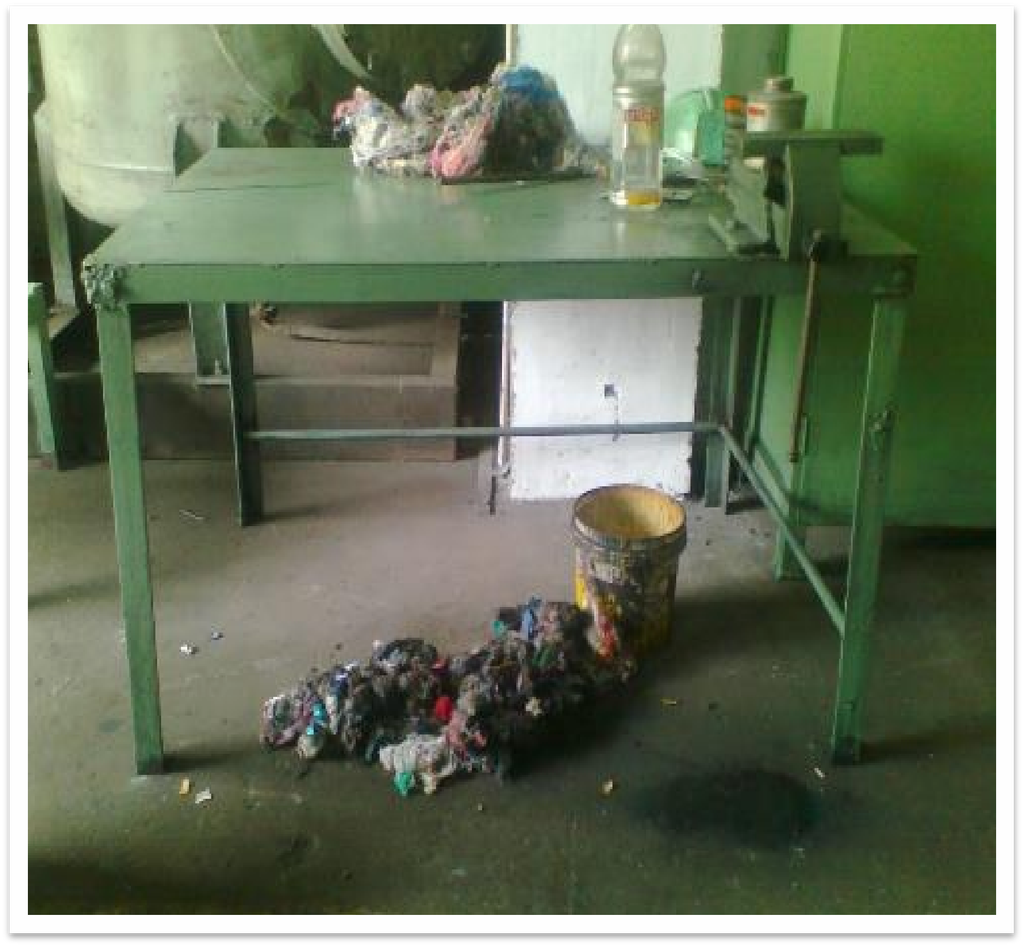
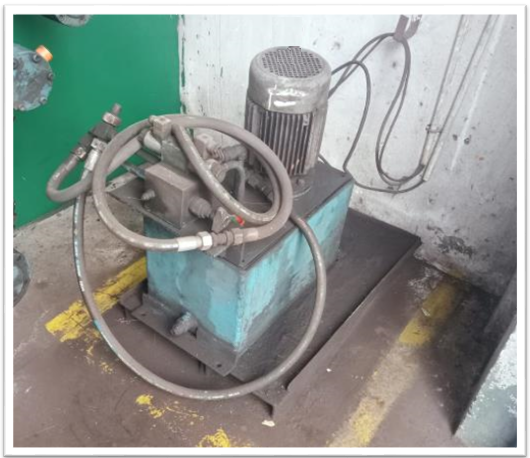
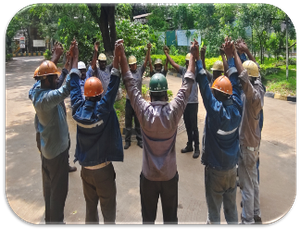
We also trained our technicians on the 5S concepts. 5S Pledge taken everyday to make it a habit ..
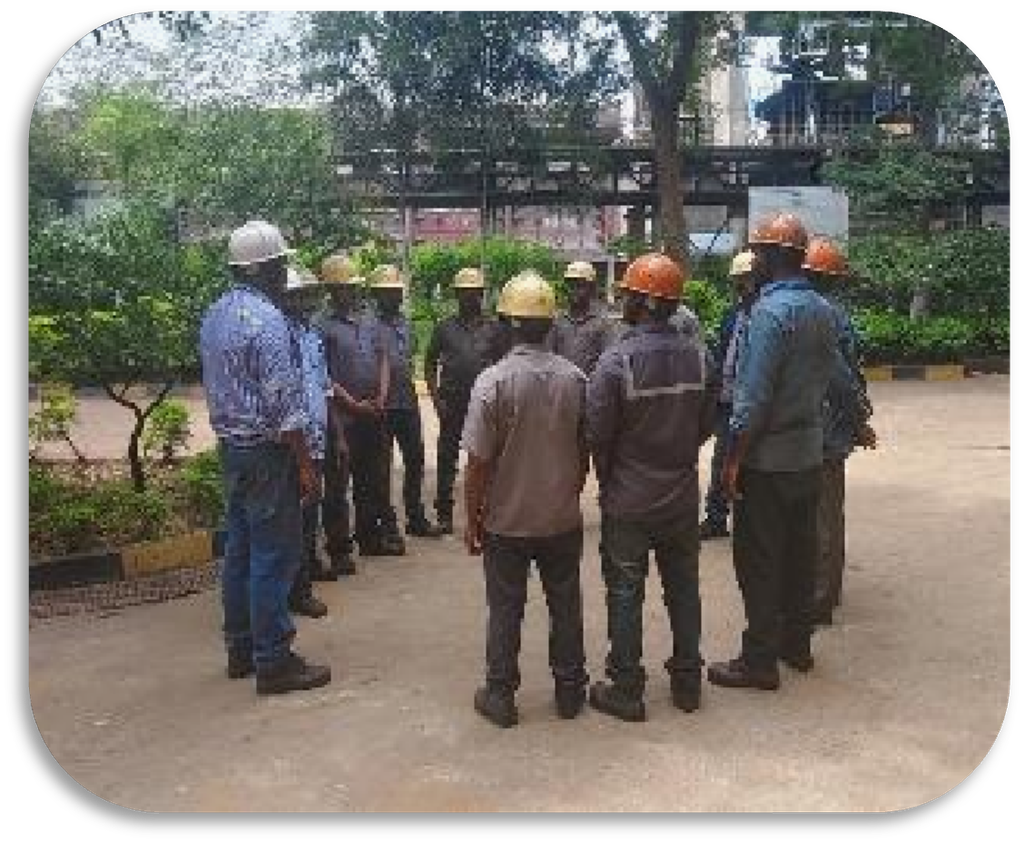
Implementation of 1st S -SORT
We identified, classified, and removed all unnecessary materials from our hydraulic service room, retaining only the items required for our day-to-day activities. Red tags were used to identify unnecessary materials, which were then handed over to the stores. Through this Sort activity, we created additional space and established a clear classification of materials within our department.
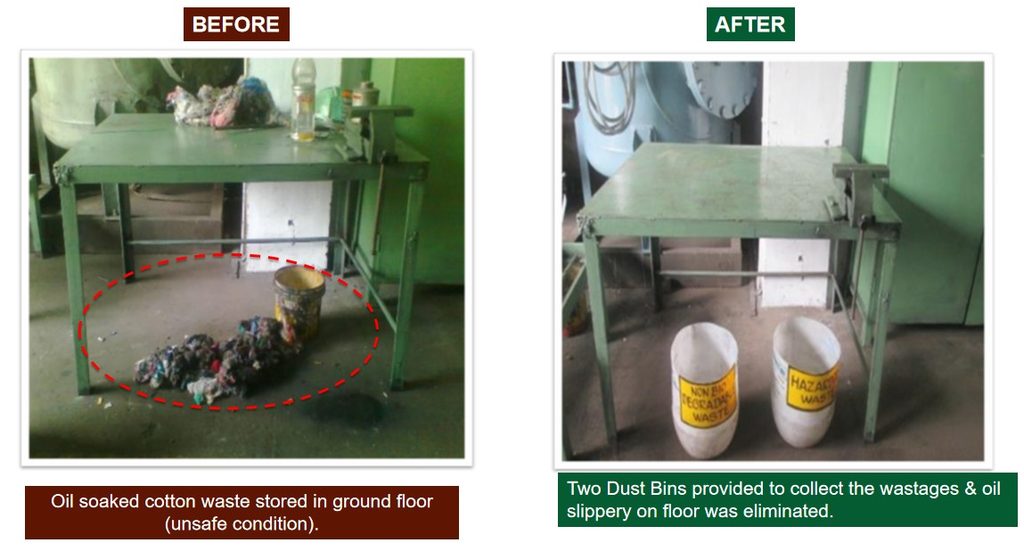
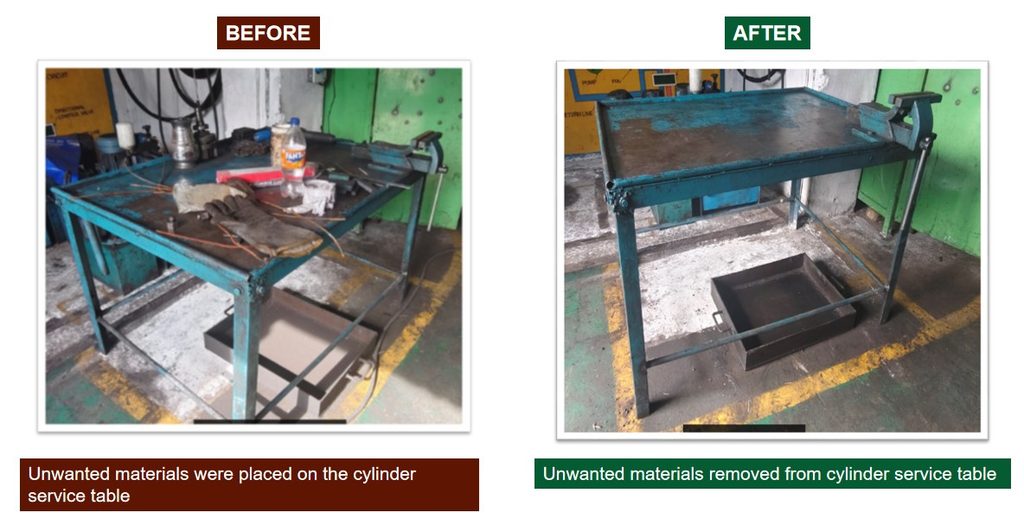
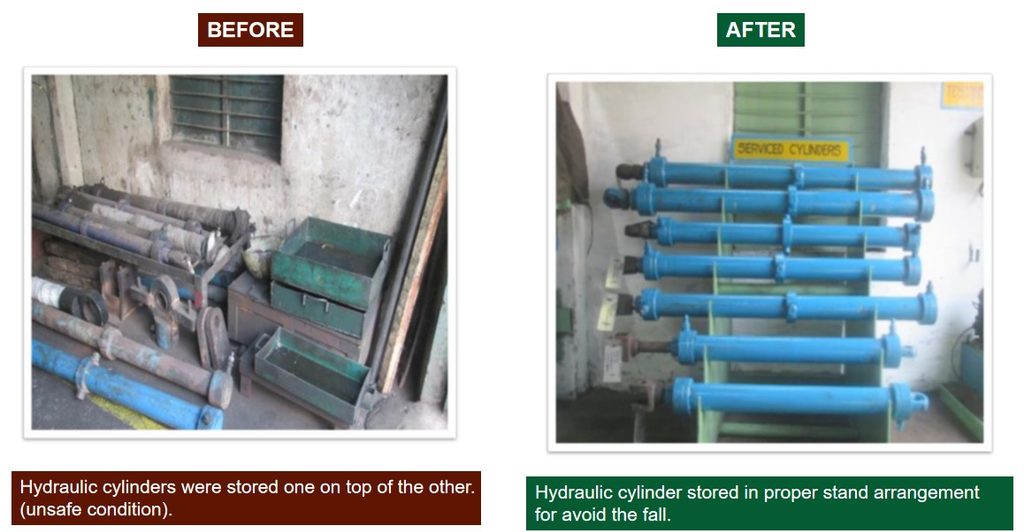
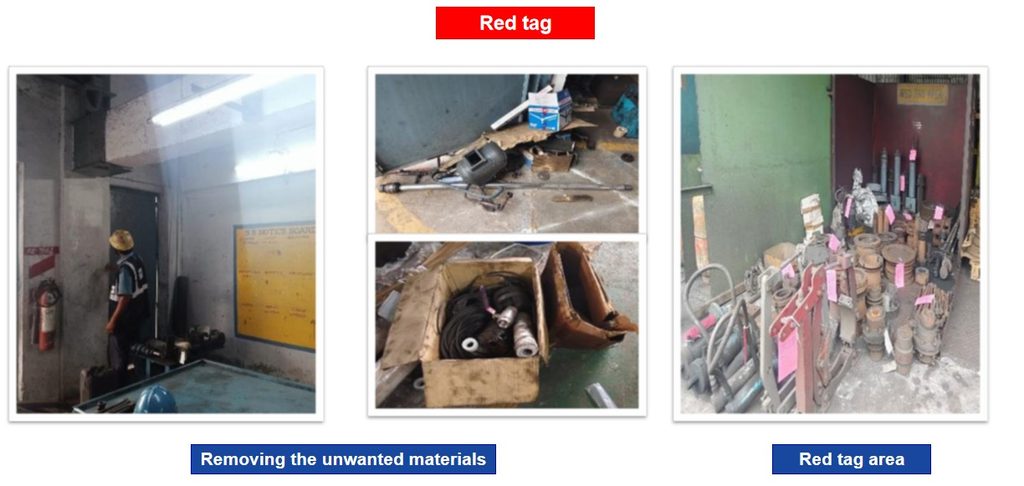
After removing the unwanted materials from our Hydraulic Service Room, we identified around 21 red-tagged items. These materials were tagged and stored in a separate designated area.
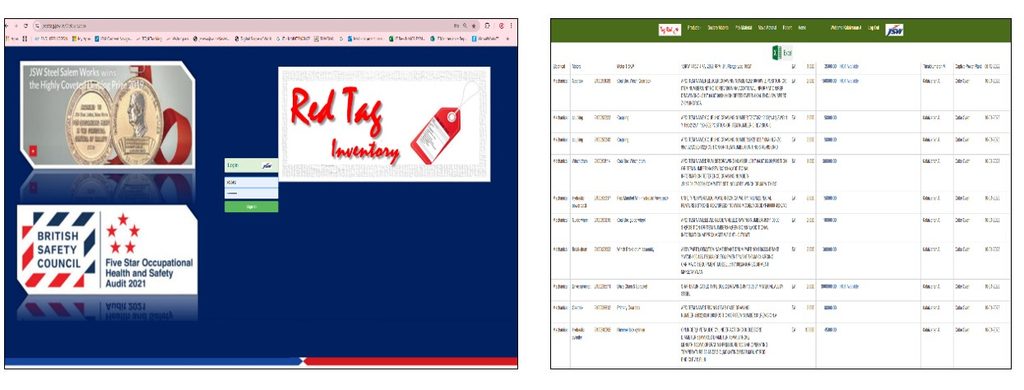
Our organization also maintains a Red Tag Portal where we enter the details and specifications of the tagged materials. If anyone within our plant requires any of these items, they can check the portal to find the material details and easily contact the concerned person.
Benefits from SORT
| S.No | Criteria | Units | Status | ||
| Before | After | Benefits | |||
| 1 | Space saving in hydraulic room | Sq.Ft | 100 | 250 | 150 |
| 2 | Red tag material collected | Nos | 21 | 2 | 19 |
| 3 | Elimination of unsafe condition | Nos / Occasion | 0 | 1 | 1 |
| 4 | Usage of vertical space | Sq.Ft | 50 | 150 | 100 |
Also read: Wrench Time Analysis: How We Reduce Stamping Hammer Lifting Time from 45 to 21 Minutes
Implementation of 2nd S – SET IN ORDER
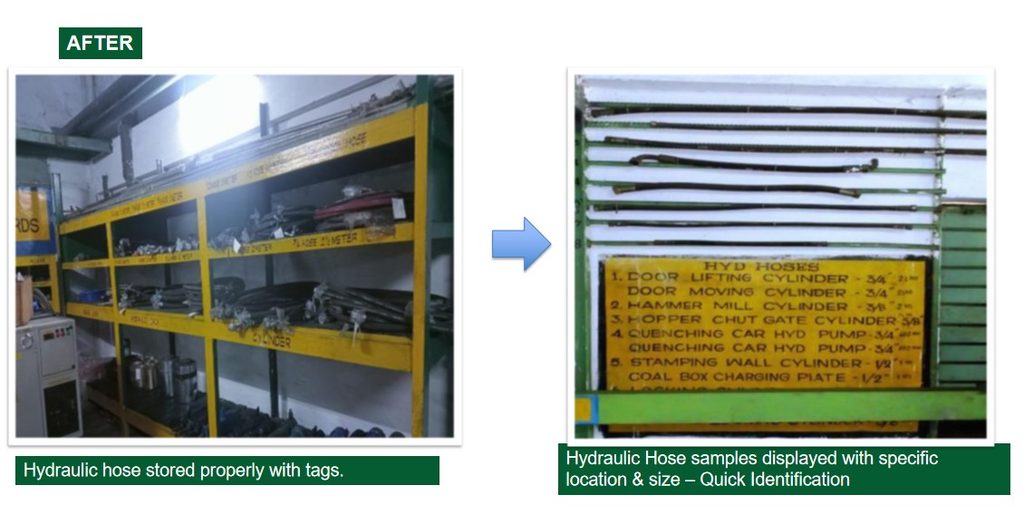
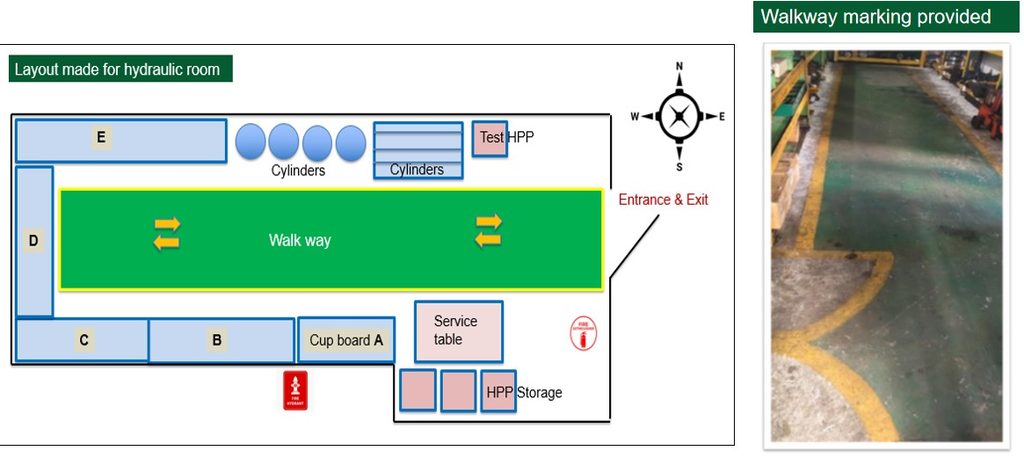
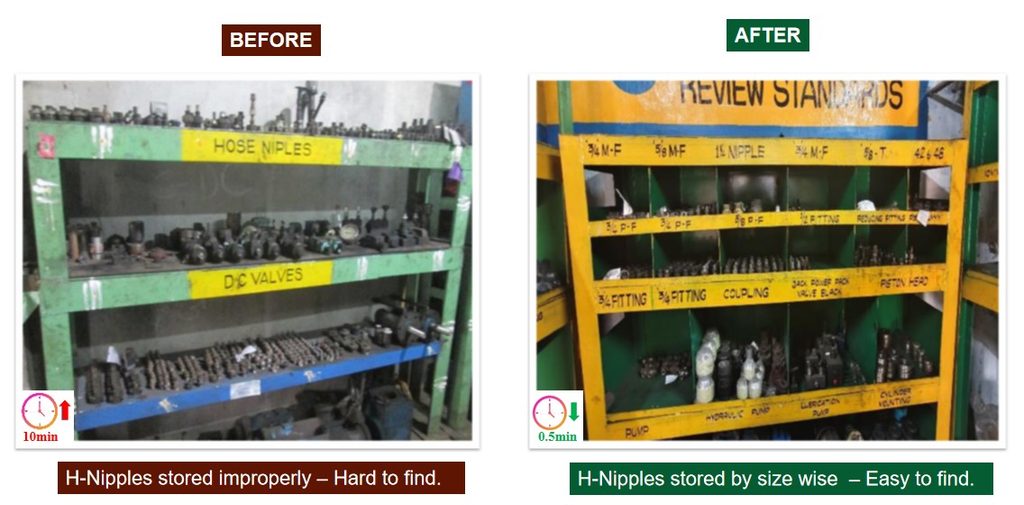
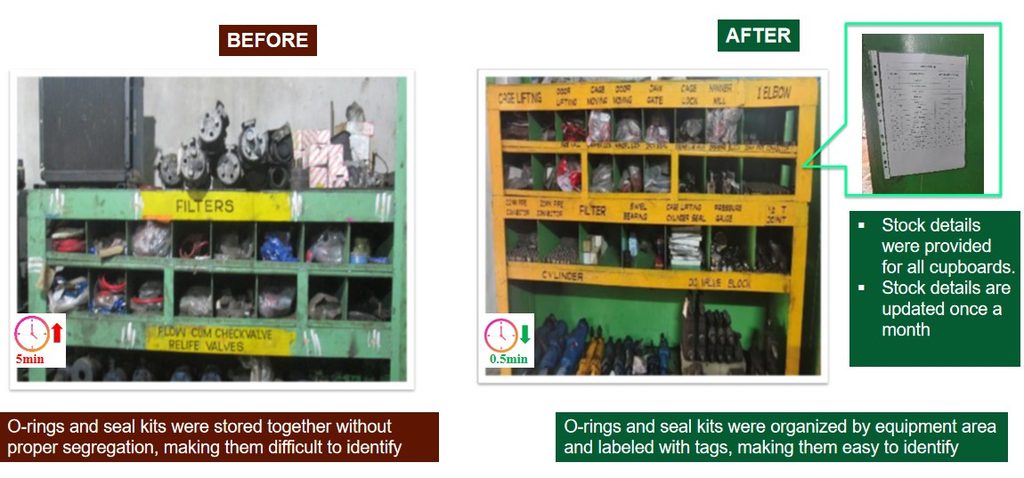
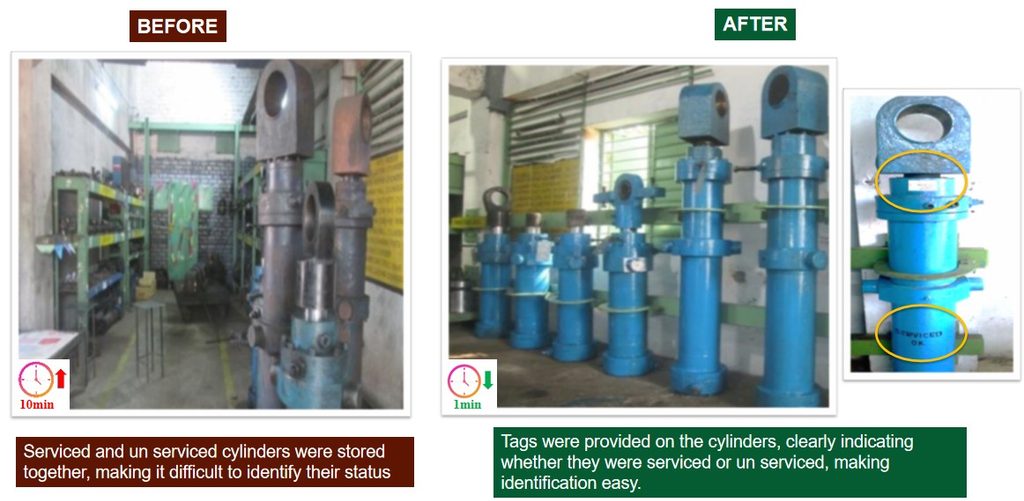
We ensured that every item had a designated place and was maintained in its proper location. Each necessary item was clearly identified to enable easy access and retrieval. We established a systematic identification and storage method so that anyone could quickly locate, use, and return materials to their designated places. To support this, we implemented colour coding, numbering, labelling, and zoning across our hydraulic service room
Benefits from SET IN ORDER
| S.No | Criteria | Units | Benefits | ||
| Before | After | ||||
| 1 | Retrieval time of O rings | Minutes | 20 | 1 | 19 |
| 2 | Retrieval time of tools from tools cup board | Minutes | 5 | 0.5 | 4.5 |
| 3 | Retrieval time of couplings & valves | Minutes | 10 | 1 | 9 |
| 4 | Retrieval time of nipples & fittings | Minutes | 10 | 1 | 9 |
| 5 | Retrieval time of hoses | Minutes | 10 | 1 | 9 |
| 6 | Retrieval time of seals | Minutes | 20 | 1 | 19 |
| 7 | Retrieval time of cylinders | Minutes | 10 | 1 | 9 |
Implementation of 3rd S – SHINE
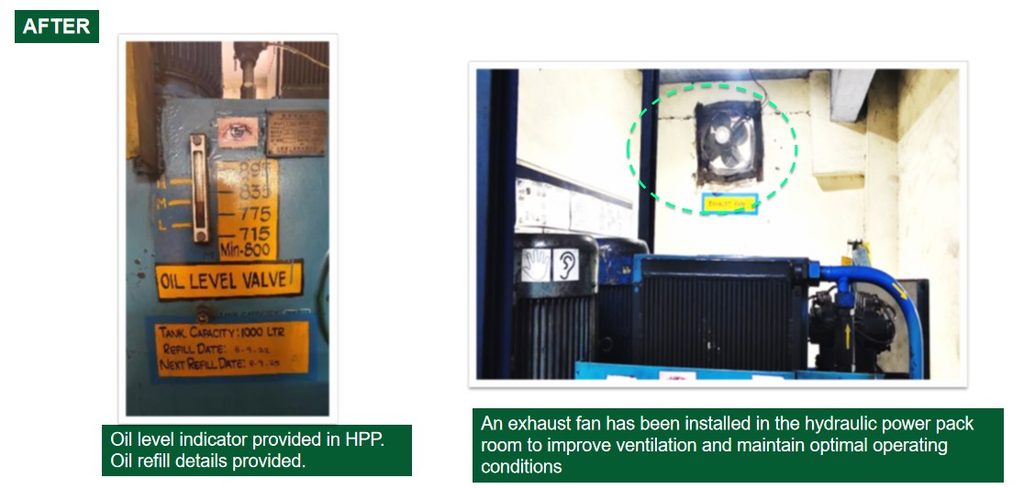
We identified and eliminated sources of dirt, addressed difficult-to-clean areas, and rectified deteriorated parts to maintain workplace cleanliness. We ensured that all equipment and materials were kept clean and in good condition, ready for use at all times.
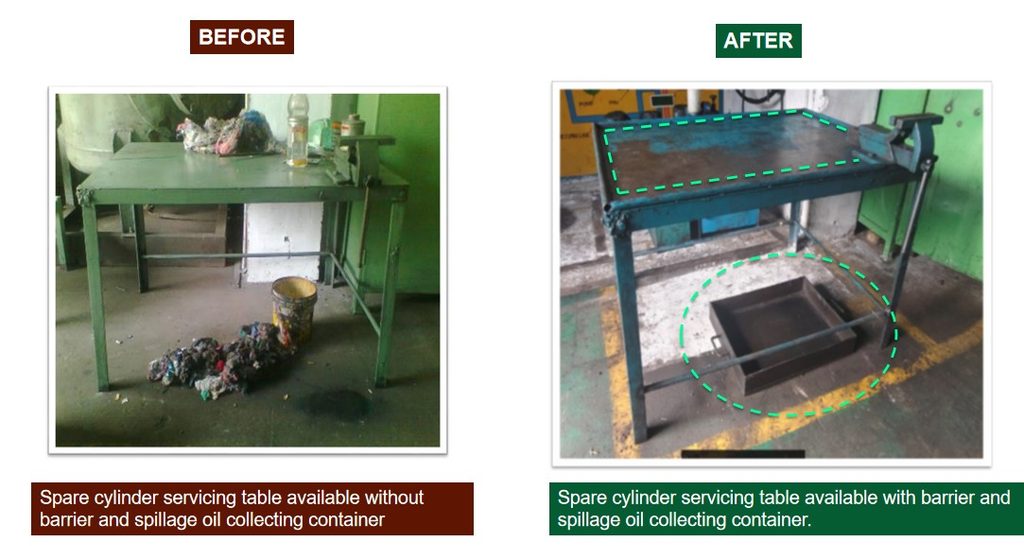
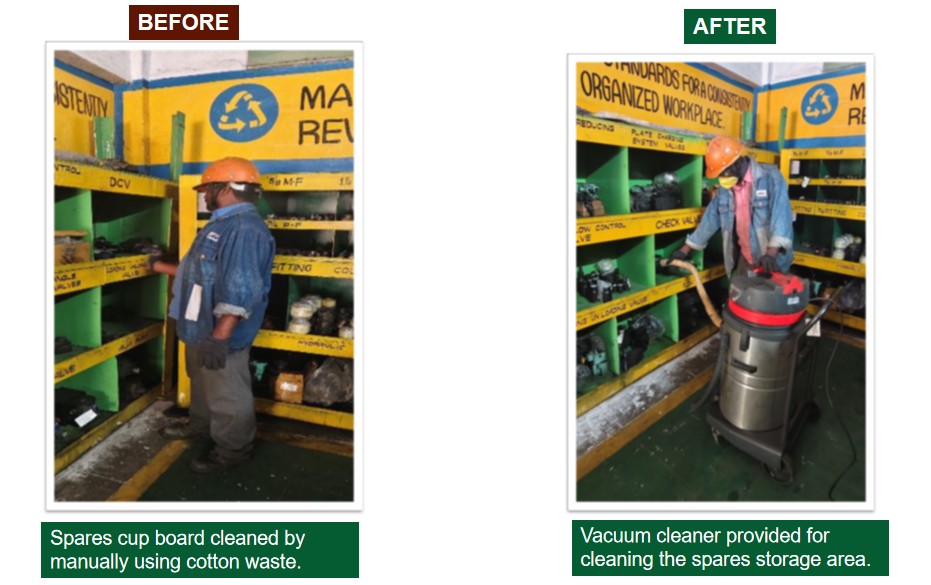
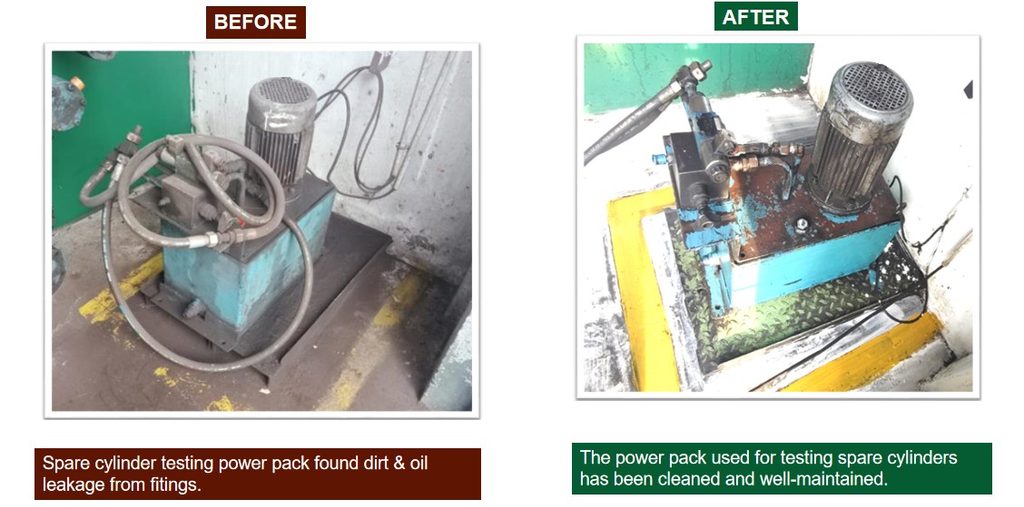
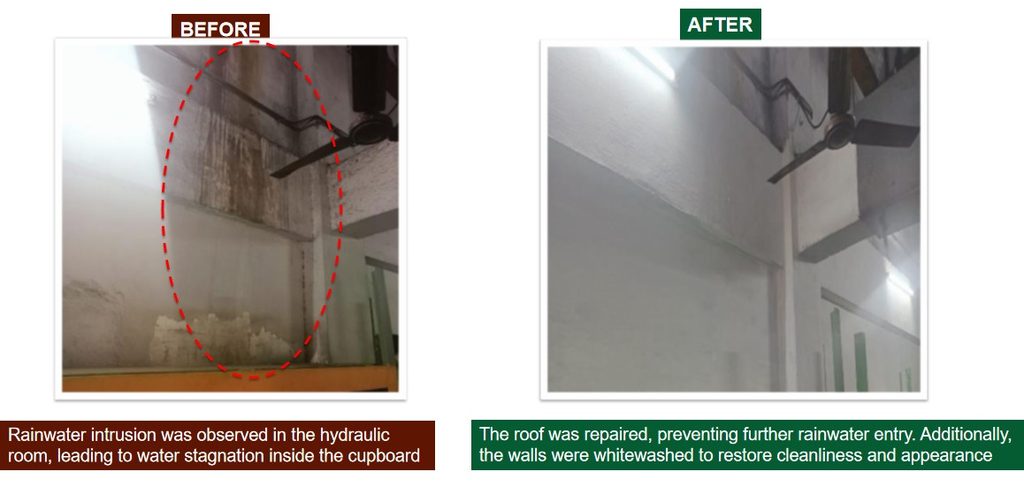
Benefits from SHINE
| S.No | Criteria | Units | Benefits | ||
| Before | After | ||||
| 1 | Reduction of hydraulic room cleaning time | Mins | 60 | 30 | 30 |
| 2 | Rain water entering stoppage | No of locations | 4 | 0 | 4 |
| 3 | Reduction of cylinder failure | Cylinder failure / Year | 4 | 0 | 4 |
| 5 | Reduction of hose failure | Hose damage/Year | 2 | 0 | 2 |
| 6 | No of lighting arrangement | Nos | 3 | 6 | 3 |
Implementation of 4th S – STANDARDIZE
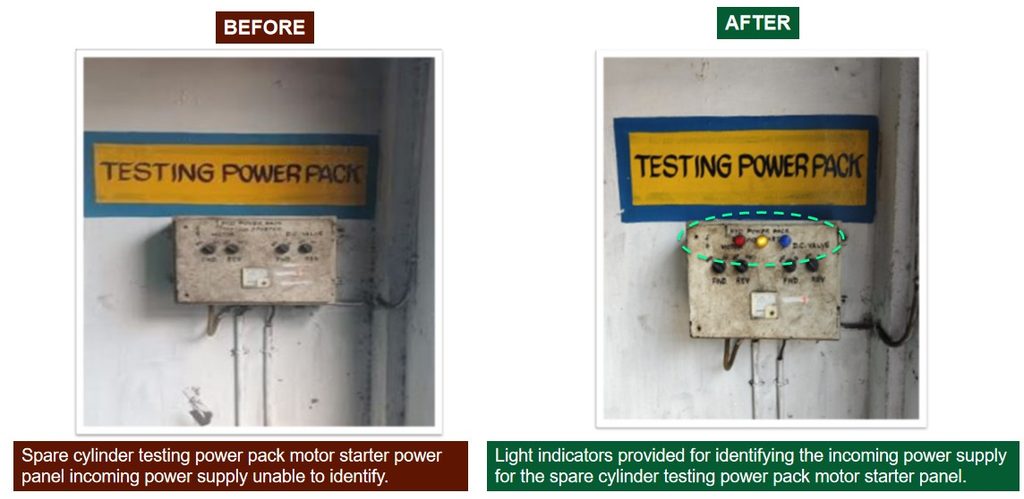
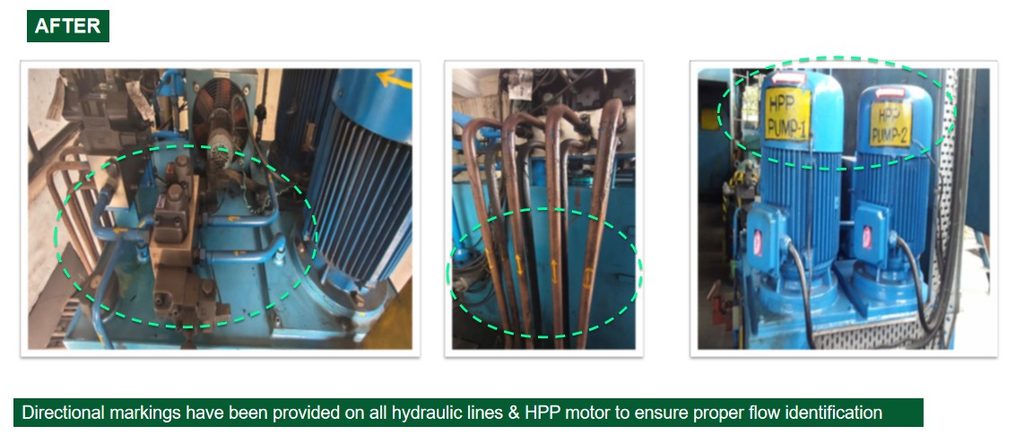
We standardized the implementation of the first three S’s (Sort, Set in Order, and Shine) across our hydraulic service room. We developed standard operating procedures (SOPs), displayed 5S and safety signs, implemented a standard colour-coding system, and established designated zones for storing and parking equipment.
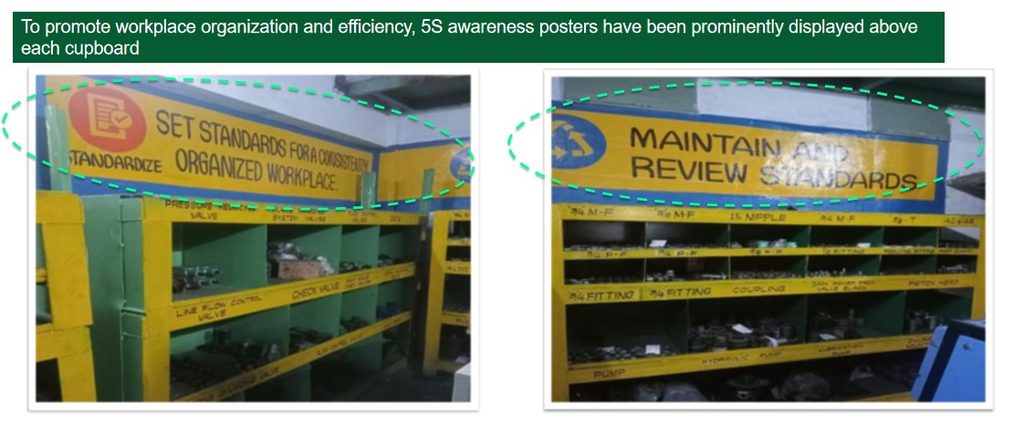

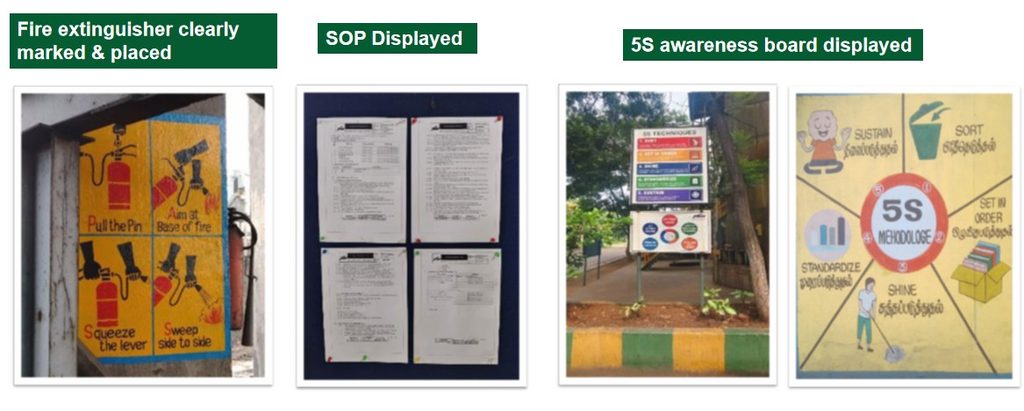
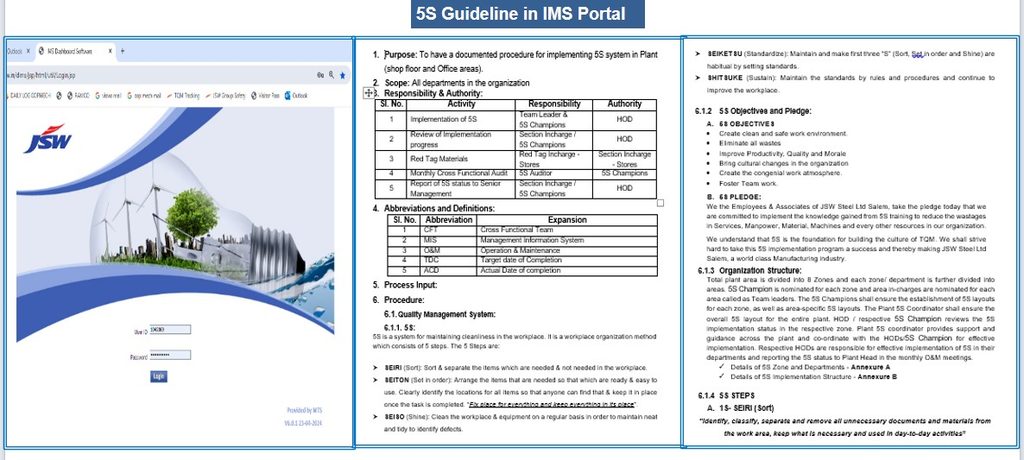
We use the 5S guidelines maintained in our organization’s IMS Portal for easy access to standardized procedures and implementation of 5S across all other areas in our Plant.
Audit System
5S implementation is monitored through Management Audits conducted by senior management, 5S Cross-Functional Team (CFT) Audits, and 5S Zonal In-charge Audits. The 5S incentive audit is jointly conducted by 5S Champions and the Business Excellence (BE) team for selected areas. Team members are eligible for 5S incentives if the overall audit score is 85% or above, with a weightage of 20% for the 5S Champions’ audit, 20% for the BE team audit, and 60% for the CFT audit.
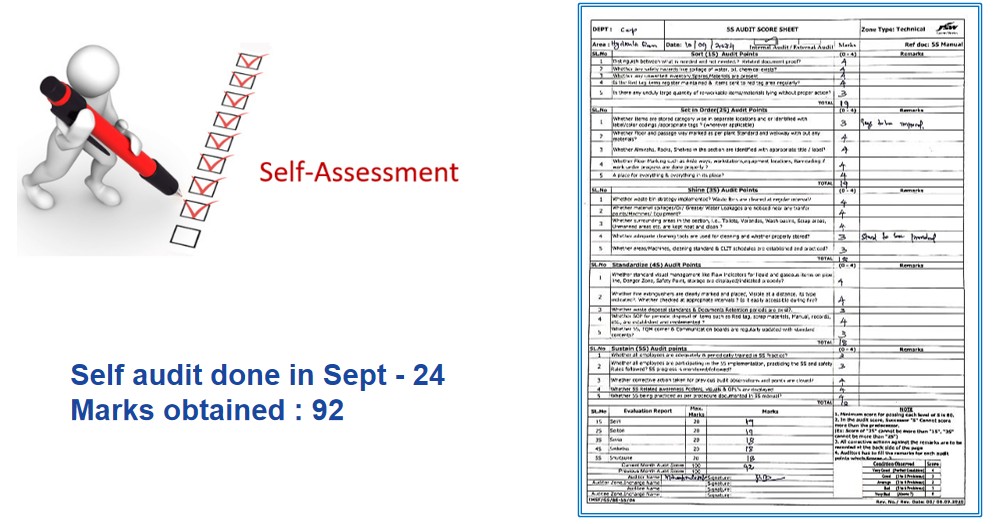
We then initiated a 5S self-audit system in our department and achieved a score of 92 out of 100 in September 2024.
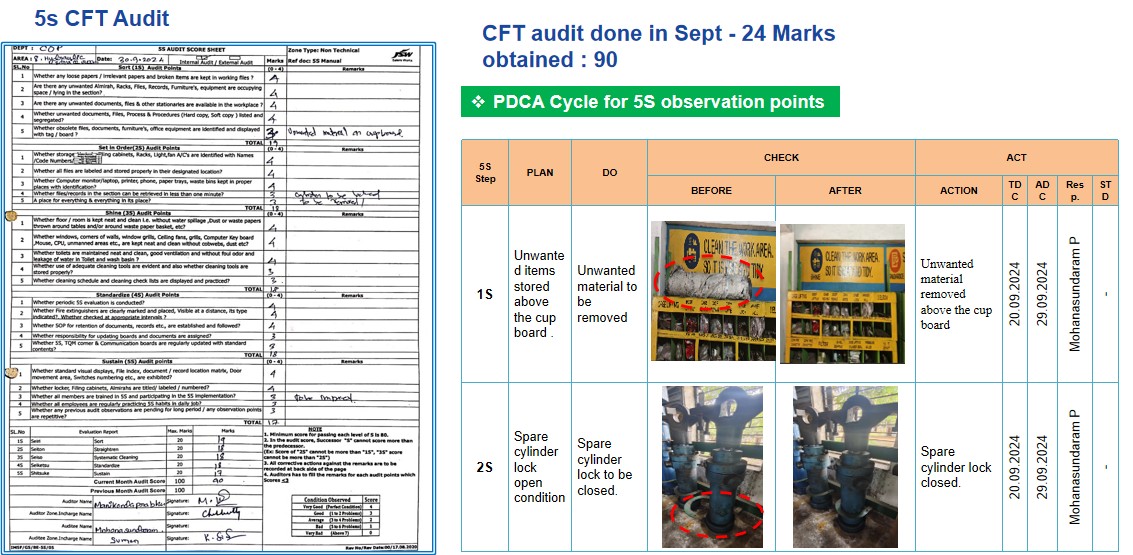
During the same month, we scored 90 out of 100 in the CFT audit. We reviewed the remarks for the areas where marks were reduced and submitted PDCA fixed-point photographs as evidence of the corrective actions taken. We have continued this practice for every audit remarks.
Benefits from STANDARDIZE
| S.No | Criteria | Units | Status | ||
| Before | After | Benefits | |||
| 1 | Reduction of hose failures (Heat applications) | Nos | 8 | 2 | 6 |
| 2 | Reduction of spare cylinder testing time | Mins | 30 | 20 | 10 |
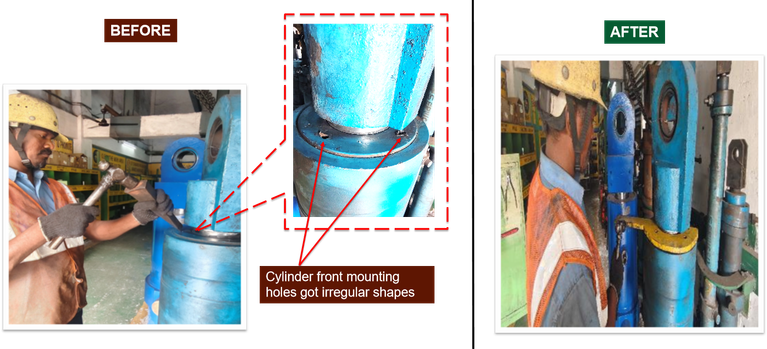
| 3 | Reduction of stamping side wall cylinder service time | Mins | 120 | 90 | 30 |
| 4 | Reduction of plate charging structure lifting cylinder service time | Mins | 300 | 240 | 60 |
Implementation of 5th S – SUSTAIN
We sustained 1S–5S practices through discipline, commitment, and employee involvement. We conducted awareness and refresher training, followed a daily 5S pledge, and carried out regular cross-functional 5S audits. We encouraged participation through 5S displays, recognition, and awards for housekeeping improvements. Monthly best practices were selected and rewarded.
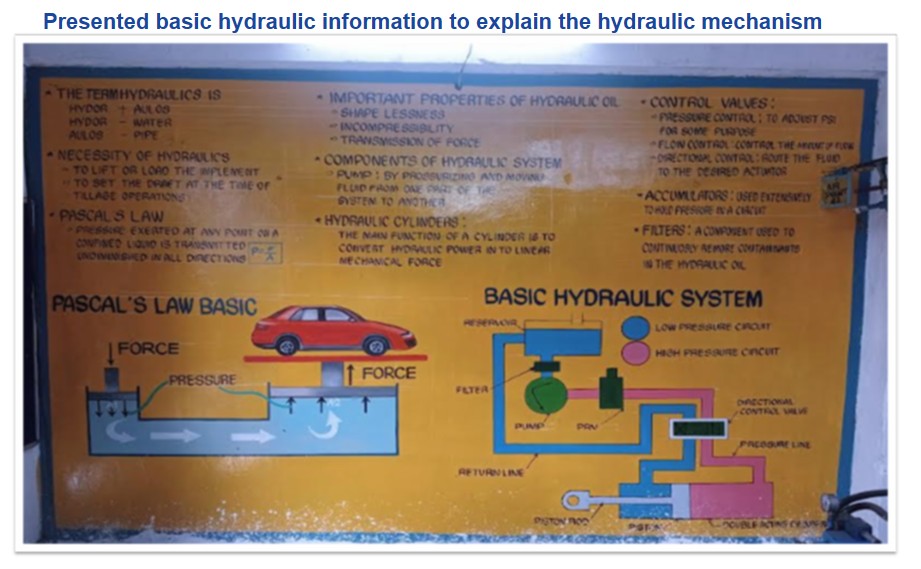
By implementing 5S in our hydraulic room, we improved equipment maintainability and reduced Mean Time to Repair (MTTR).
| IMPROVEMENT IN MTTR | ||||
| Sl.No. | EQUIPMENTS | Target | Before MTTR (Hours) |
After MTTR (Hours) |
| 1 | Stamping Station-I | 1.50 | 3 | 2 |
| 2 | Stamping Station-II | 1.50 | 2.05 | 1.00 |
| 3 | Pusher Car-I | 1.50 | 2 | 1 |
| 4 | Pusher Car – II | 1.50 | 1.5 | 0.5 |
| 5 | Quench Car | 1.50 | 3.03 | 1.50 |
| MTTR (Mean Time to repair)=Sum of time for repair / No.of repair | ||||
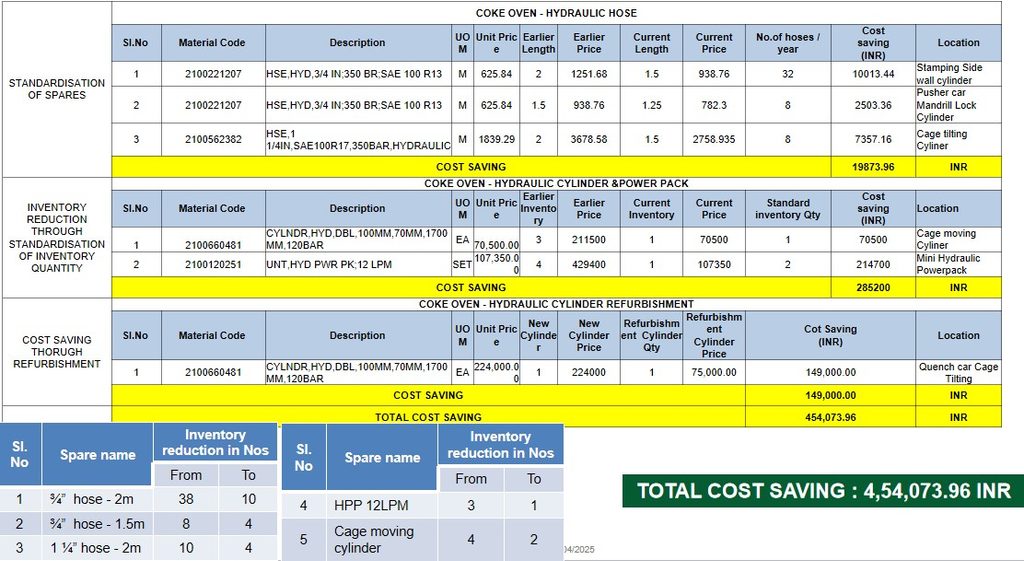
The Inventory reduced in hydraulic Spares
Benefits from SUSTAIN
| S.No | Criteria | Units | Status | ||
| Before | After | Benefits | |||
| 1 | No of SOPs revision – hydraulic room 5s | Nos | 8 | 16 | 8 |
| 2 | No of Kaizen | Nos | 4 | 11 | 7 |
| 3 | Employee morale improved | Nos | Intangible benefits | ||
Achieved Gold Award in the 5S Internal Convention 2025, recognizing best adherence to 5S principles
Every year, our organization conducts an internal 5S convention. On May 24, 2025, all departments in our plant participated in the convention, with a total of 15 teams taking part. Our team also participated and received the Gold Award.
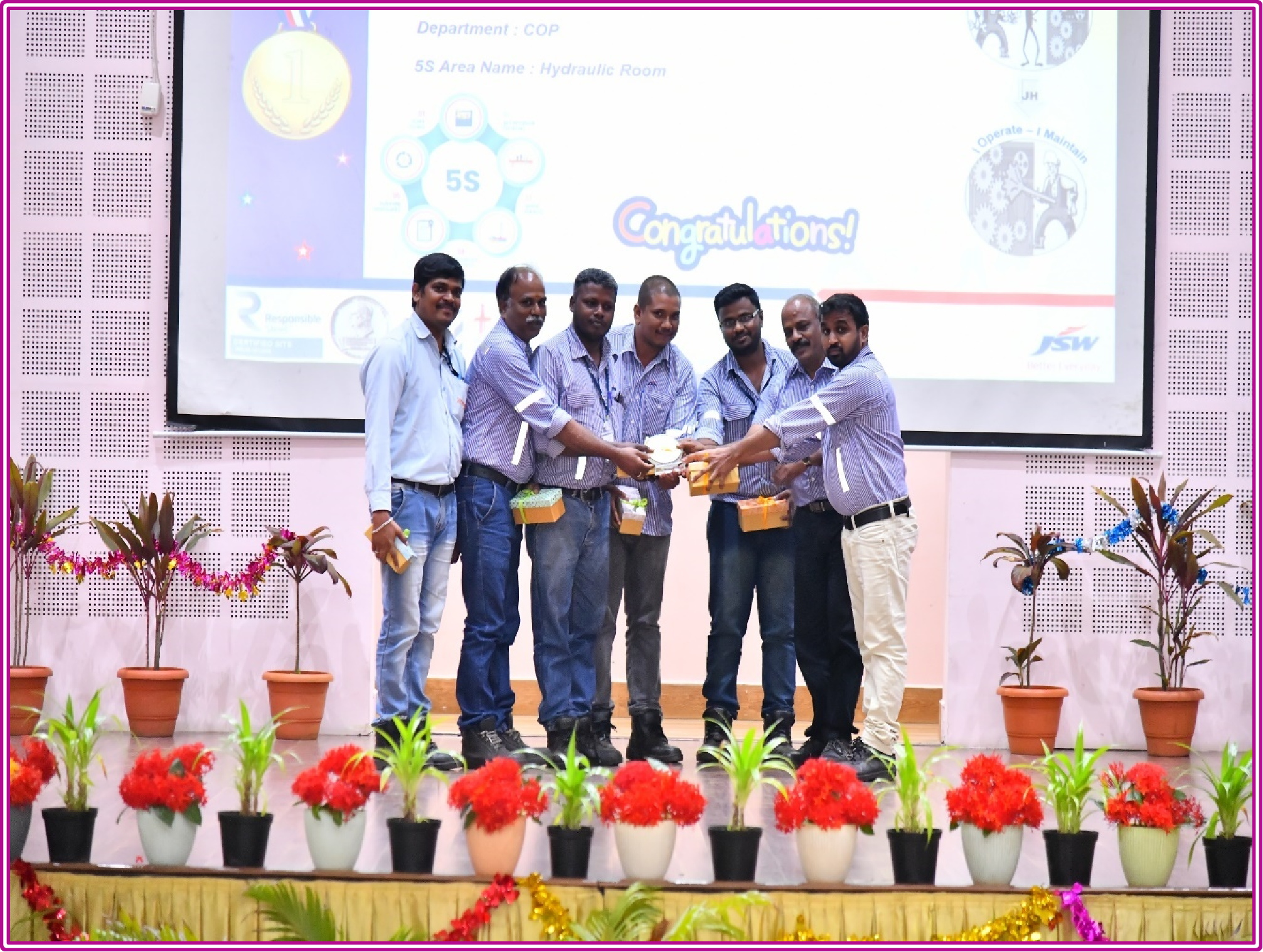
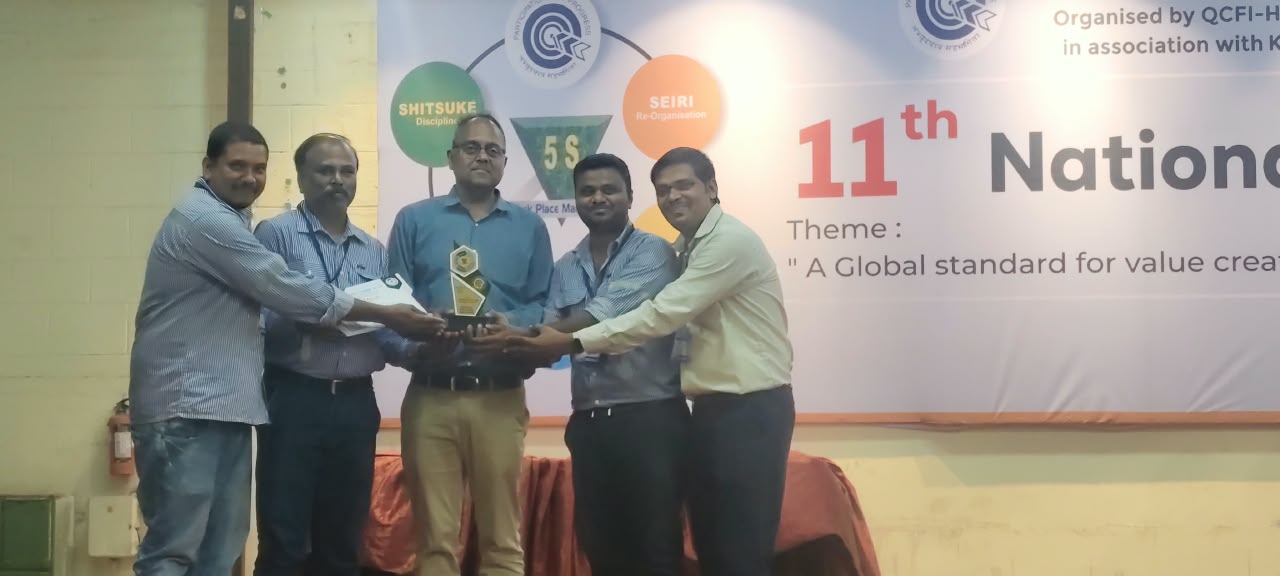
In June 2025, our team participated in the 11th NCQC competition at the Madurai Chapter, held at KLN College of Engineering. We presented our 5S implementation and won the Par Excellence Award. The team members are Mr. Mohan, Mr. Kandhaguru, Mr. Mani, and Mr. Loganathan.
Also read:
Can 75 meter tall steel chimney structures be dismantled without having a path for access?
Simplify the Belt Conveyor Maintenance with 5 Essential implementations.