
Industrial Maintenance

  • |

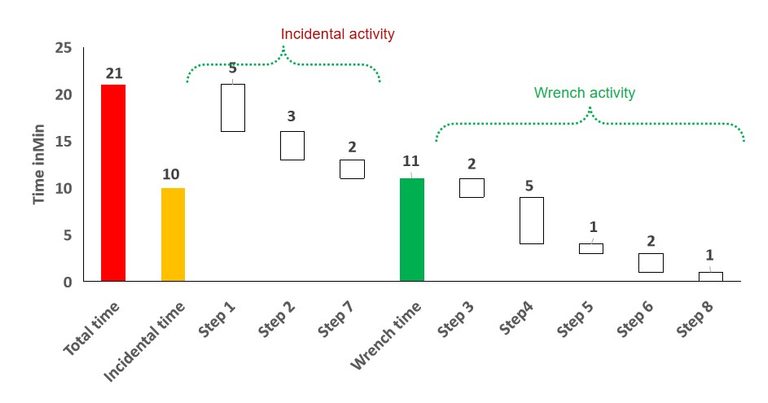
    Wrench Time Analysis: How We Reduce Stamping Hammer Lifting Time from 45 to 21 Minutes

    If a technician works an 8-hour shift and spends 3 hours arranging tools and spare parts, and travelling to the job location, the remaining 5 hours spent directly on equipment maintenance is considered Wrench Time. The thing is, wrench Time does not include break time. Other activities, such as collecting tools, arranging spare parts, and travelling to the job location, are necessary to complete the work, but they are not included in Wrench Time. Proper planning helps maintenance technicians work more efficiently during repairs.
    In our plant, two stamping stations are available. The stamping station is a critical area where a 55 MT coal cake with a bulk density of 1.17 kg/m³ is prepared using a hammering mechanism. The coal is compacted by dropping hammers up and down inside a closed box.
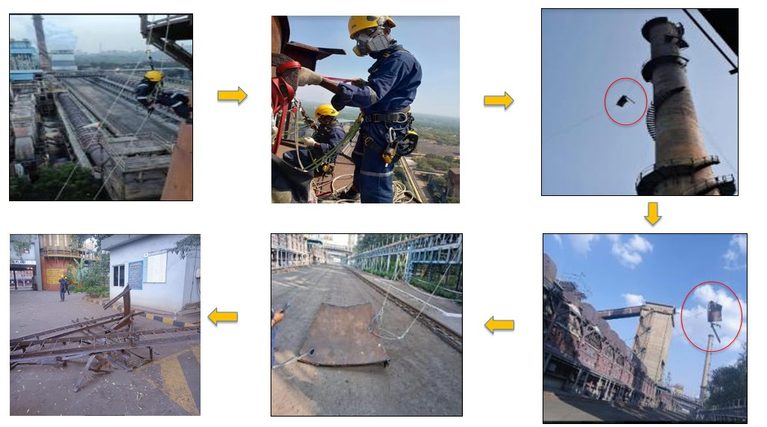
  • Can 75 meter tall steel chimney structures be dismantled without having a path for access?

    Yes, we did. Since there was no proper access to the chimney between the 35 m and 75 m levels, we safely dismantled the corroded structures without any production loss. In this article, I explain how we implemented this method.

    Our Steel Chimney 1B is used to discharge flue gases from Battery #1 ovens during WHRB-1 (Waste Heat Recovery Boiler) shutdowns. It is located near the plant entrance and office, where manpower movement is high. Debris and metal pieces falling from the chimney at heights ranging from 35 m to 75 m created a serious safety hazard for man power moving around the ground-level area.

  • These Improvements Can Reduce Your Hydraulic Maintenance Burden in Industries

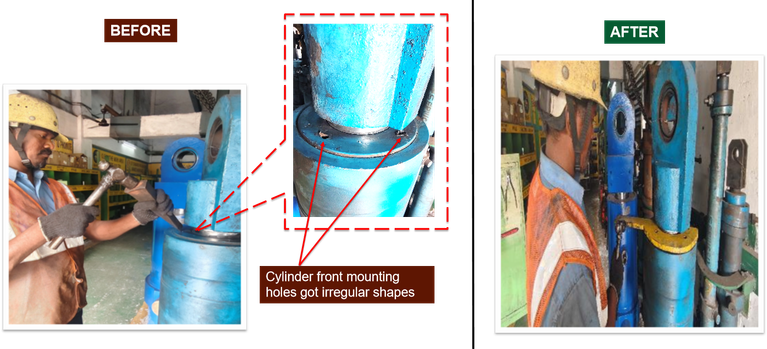
    I am working in the Coke Manufacturing division of a steel plant from last 11 years, where hydraulic equipment is used throughout the production process. We observed frequent equipment failures and longer maintenance times. To address these issues, we initiated several modifications to improve equipment reliability and reduce maintenance time.

    I have shared details of five modifications that have proven useful at our plant. These tools are easy to fabricate and were developed in-house with the support of our technicians. The details provided here can be used for horizontal deployment across similar hydraulic equipment and as a benchmark for maintenance improvement activities in other plants.