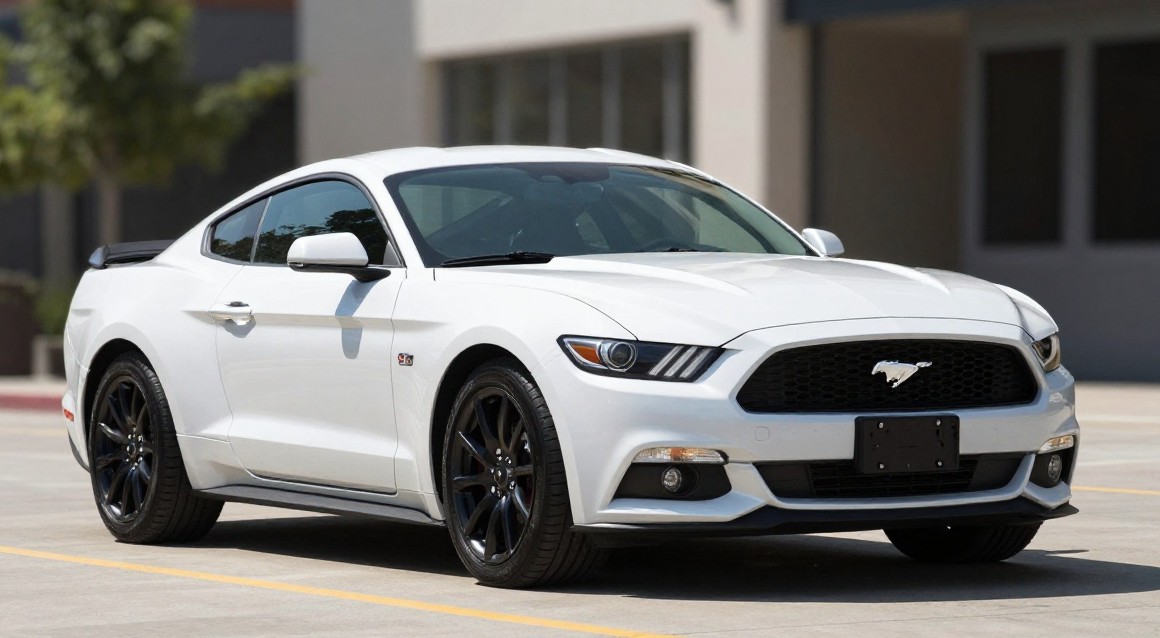
Ford Mustang EcoBoost 2026: Why It’s Not the “Weak” Mustang You Think It Is
Is the Ford Mustang EcoBoost actually a “real” Mustang? Mention you’re eyeing a Ford Mustang EcoBoost to a die-hard V8 guy and you’ll get the look. That squint that says you picked the “lesser” one. The four-cylinder Mustang has spent years fighting a reputation it hasn’t earned. It’s lighter than…
Is the Ford Mustang EcoBoost actually a “real” Mustang?
Mention you’re eyeing a Ford Mustang EcoBoost to a die-hard V8 guy and you’ll get the look. That squint that says you picked the “lesser” one.
The four-cylinder Mustang has spent years fighting a reputation it hasn’t earned. It’s lighter than the V8. It balances better in the corners. And for most people driving it every day, it’s more fun than the spec sheet suggests. It’s also the Mustang most first-time buyers actually drive home in. They just don’t always admit that on forums.
Table of Contents
Ford Mustang EcoBoost engine and performance explained
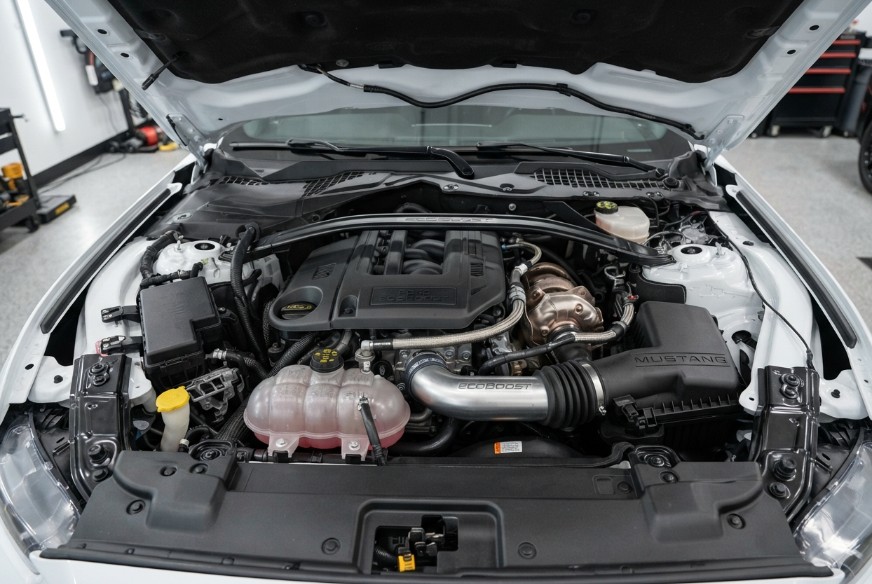
The EcoBoost badge means Ford’s turbocharged 2.3 liter inline four. It’s the same basic architecture since 2015, heavily revised along the way.
Quick answer: the Ford Mustang EcoBoost makes around 315 horsepower and 350 lb-ft of torque. It hits 0-60 mph in about 5.2 to 5.5 seconds, depending on the transmission and options you pick.
How it compares to the GT V8
| Spec | EcoBoost (2.3L Turbo) | GT (5.0L V8) |
| Horsepower | ~315 hp | ~480 hp |
| Torque | ~350 lb-ft | ~415 lb-ft |
| 0-60 mph | ~5.2-5.5 sec | ~4.2-4.5 sec |
| Weight | ~200 lbs lighter | Heavier front end |
| Fuel economy | ~26-27 mpg combined | ~19-20 mpg combined |
The torque number is the real story. That 350 lb-ft shows up low in the rev range. That’s why the EcoBoost feels punchy around town and merging onto the highway. You don’t need to rev it out to feel the push.
What’s new in the Ford Mustang EcoBoost 2026
Ford didn’t redesign the seventh generation Mustang (S650) for 2026. Instead they kept it fresh with steady updates. Here’s what changed for the Ford Mustang EcoBoost 2026 model year:
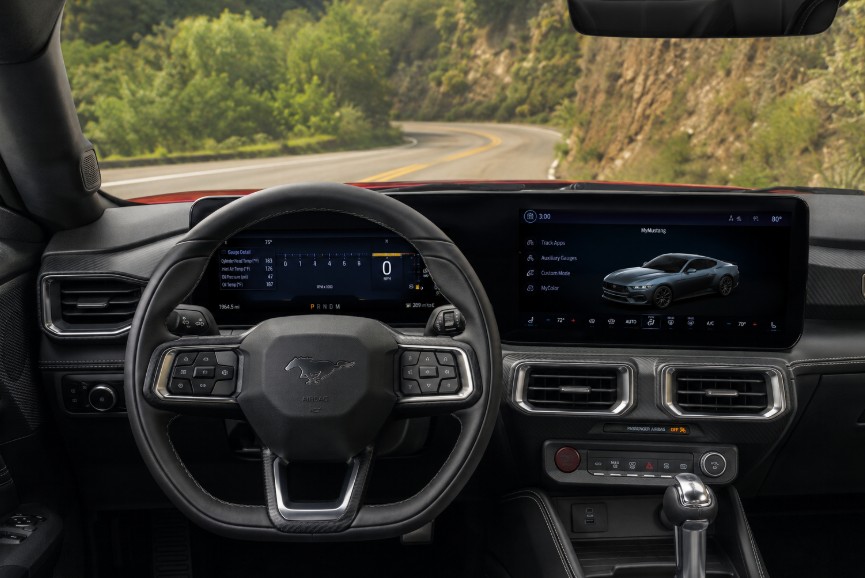
- Updated digital cockpit software. The infotainment responds faster now, and the graphics on the 12.4 inch cluster and 13.2 inch center screen got a refresh.
- More driver assist features. More markets now get adaptive cruise and lane centering, either standard or as a cheap option.
- Trim and color shuffles. Ford rotates special edition packages and paint colors most years, without touching the mechanicals.
- The Performance Package is still around. It adds a limited-slip differential, upgraded brakes, and unique suspension tuning.
The engine and chassis are the same proven setup Ford has used for years. That’s good news if you care about reliability more than novelty.
Ford Mustang EcoBoost fuel economy and running costs
Quick answer: most EcoBoost Mustang owners see real world fuel economy between 24 and 29 mpg (8 to 9.8 L/100km). It depends on how you drive and which transmission you picked.
USA ownership costs
In the US, the EcoBoost’s biggest money advantage over the GT shows up in three places:
- Insurance premiums. Turbo four-cylinder Mustangs usually cost less to insure than V8 GT models in most states.
- Fuel costs. Better highway mileage adds up fast over a typical 12,000 to 15,000 mile year.
- Purchase price. The EcoBoost starts several thousand dollars below the GT, which also lowers your sales tax and financing costs.
Europe specific considerations
Mustang buyers in Europe deal with different pressures than buyers in the US.
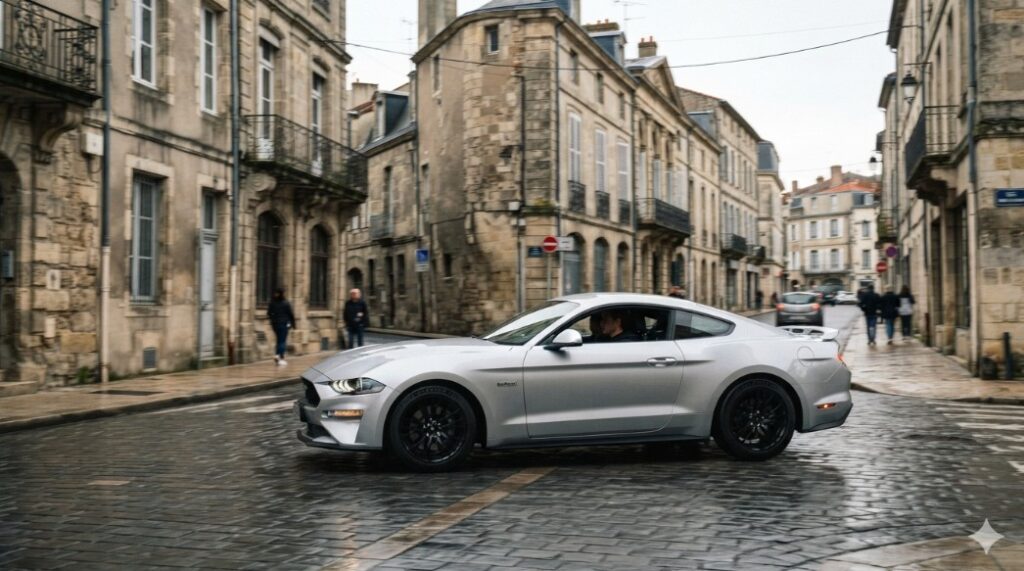
- CO2 based road tax hits large V8s much harder than the smaller EcoBoost engine. That makes the four-cylinder the practical pick in countries like Germany, the Netherlands, and the UK.
- Fuel costs more across most of Western Europe than in the US. That gap makes the EcoBoost’s efficiency matter even more.
- Emissions zones, like Low Emission Zones in UK cities or Umweltzonen in Germany, tend to favor smaller, cleaner burning engines. Still, check the current local rules before you buy.
If you’re shopping in Europe, the EcoBoost is often the more sensible Mustang on paper, budget label aside.
Who should actually buy the EcoBoost Mustang?
The EcoBoost trim makes the most sense if you:
- Want the Mustang look and rear-wheel-drive fun, without V8 running costs
- Mostly drive on public roads, not a track
- Live somewhere with high fuel prices or CO2-based taxation (much of Europe)
- Plan to daily-drive the car through winter or long commutes
The GT V8 makes more sense if straight-line speed, engine sound, and resale value with enthusiasts matter more to you than fuel savings.
Bottom line
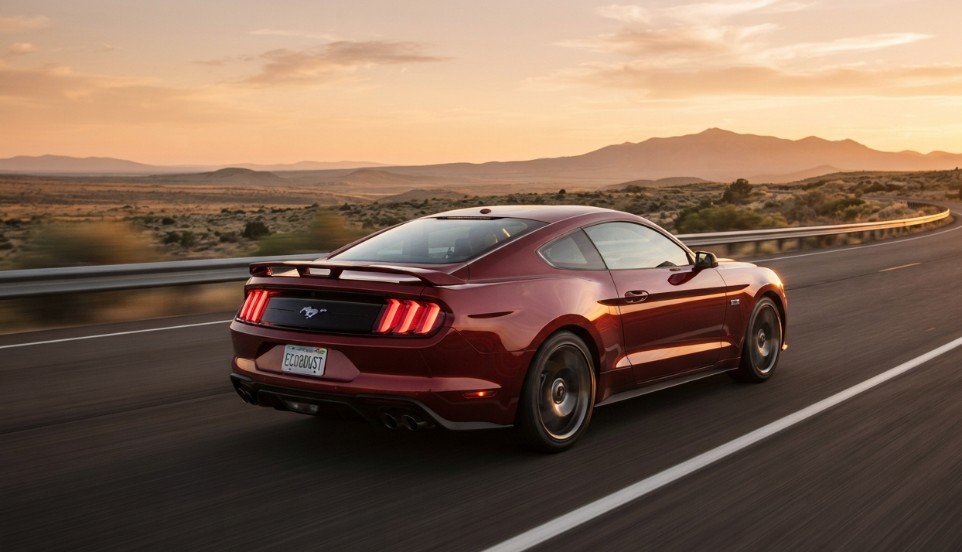
The Ford Mustang EcoBoost is a different kind of Mustang, built for a different kind of buyer. It trades outright power for less weight, better efficiency, and lower running costs. And it still keeps the rear-wheel-drive character that makes a Mustang feel like a Mustang.
Whether you’re comparing trims at a US dealership or weighing tax costs in Germany or the UK, give the EcoBoost a real look before you default to the V8.
Thinking about test-driving one? Book back-to-back test drives of the EcoBoost and GT at your local Ford dealer before you decide. The difference in feel is something no spec sheet can show you.
More:
Ford $30,000 EV Pickup: Is It Worth the Wait?
Buying a Used Tesla for Sale? Check This Before You Pay
Hummer EV Torque Explained: What 11,500 lb-ft Actually Means
Is the Ford Mustang EcoBoost fast?
Yes, for a four-cylinder. It hits 0-60 mph in about 5.2 to 5.5 seconds. That’s quick by normal standards, even if the V8 GT beats it.
Is the EcoBoost Mustang reliable?
Generally, yes. The 2.3L turbo has years of production history behind it, and it holds up well if you stick to the oil change schedule with quality oil.
What’s the difference between the Mustang EcoBoost and GT?
The EcoBoost runs a turbocharged 2.3L four-cylinder engine, around 315 hp. The GT runs a naturally aspirated 5.0L V8, around 480 hp. The EcoBoost is lighter, cheaper, and more fuel-efficient. The GT is faster and has that classic muscle-car character.
Does the Ford Mustang EcoBoost come with all-wheel drive?
No. Every current Mustang trim, EcoBoost included, is rear-wheel drive only.
Is the Mustang EcoBoost available in Europe?
Yes. Ford sells it across European markets, and the smaller engine usually means lower road tax and easier compliance with emissions rules than the V8 GT.