
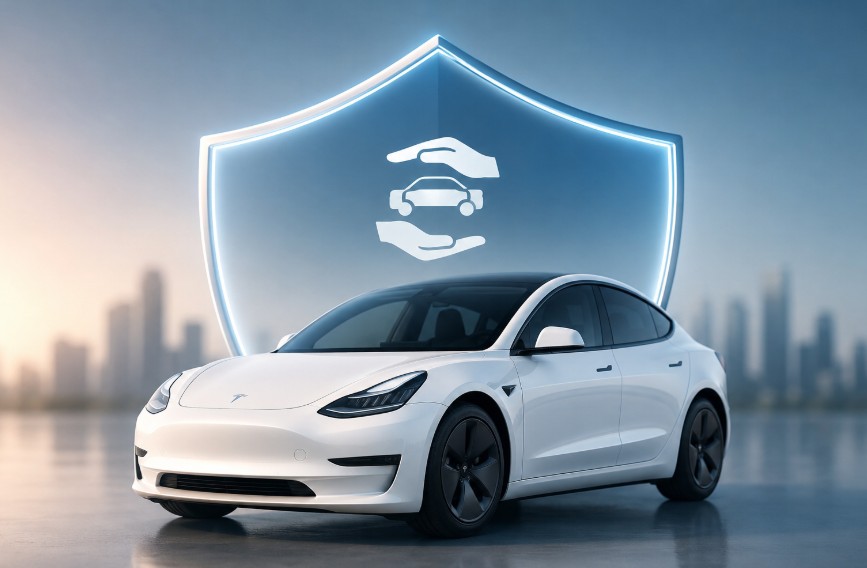
Insurance on a Tesla Model 3: What It Actually Costs in 2026
If you’re shopping for a Tesla Model 3, or you already own one and just opened your renewal notice, there’s a good chance the quote surprised you. Premiums for this car typically run higher than a comparable gas-powered sedan. The reasons aren’t always obvious from the outside. This guide breaks…
If you’re shopping for a Tesla Model 3, or you already own one and just opened your renewal notice, there’s a good chance the quote surprised you. Premiums for this car typically run higher than a comparable gas-powered sedan. The reasons aren’t always obvious from the outside.
This guide breaks down what actually drives insurance on a Tesla Model 3. You’ll see what real owners across the US are paying, and which steps lower your rate without cutting your coverage. By the end, you’ll know what a fair quote looks like for your state and driving profile, and where you’re probably overpaying.
Table of Contents
Average cost of insurance on a Tesla Model 3
Full coverage runs between $2,000 and $3,400 a year in the US. That’s roughly $170 to $285 a month, depending on your state, driving record, and coverage limits. Liability-only coverage can run $900 to $1,500 a year, though most lenders require full coverage if you’re financing or leasing.
For context, that’s 20% to 40% higher than the national average for a mid-size sedan, which sits closer to $1,600 to $2,200 a year.
Tesla offers its own insurance program in eligible markets, with premiums influenced by factors such as driving behavior, mileage, coverage choices, and the vehicle’s Safety Score. Tesla Insurance – Official Coverage Information
Here’s a rough snapshot by coverage type:
| Coverage Type | Estimated Annual Cost |
|---|---|
| Liability only (state minimum) | $900 – $1,500 |
| Full coverage (liability + collision + comprehensive) | $2,000 – $3,400 |
| Full coverage with low deductible ($250–$500) | $2,800 – $3,800 |
These numbers shift based on trim (Standard Range, Long Range, or Performance), your ZIP code, and how familiar your insurer is with EV repair costs.
Why insurance on a Tesla Model 3 costs more than a regular sedan
Almost everyone asks this. It comes down to five factors insurers weigh heavily.
Repair costs push premiums up
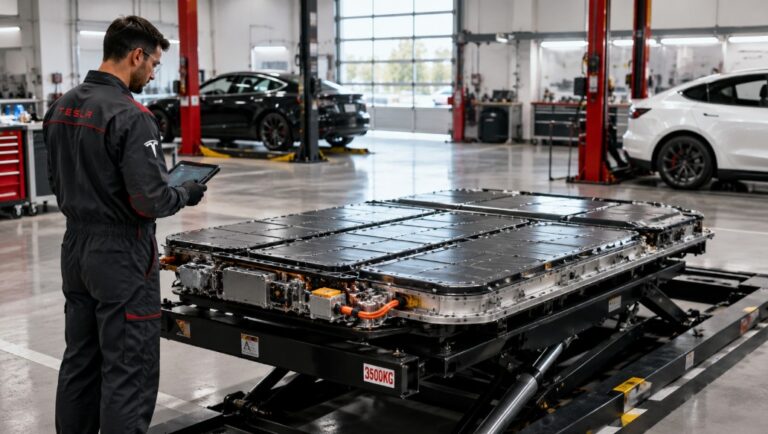
Tesla body panels, battery packs, and sensors cost a lot to source and replace. The Model 3 uses a lot of aluminum and specialized parts, and plenty of collision shops aren’t certified to work on Teslas. That narrows where you can get repairs done, and narrow options push prices up.
Limited parts availability slows claims
Tesla controls its own parts supply chain instead of going through the usual aftermarket network. Replacement parts can take weeks to show up after an accident. Longer repair times mean more rental car reimbursement, and insurers price that into your premium.
Onboard technology adds repair complexity
Cameras, radar (on older models), Autopilot hardware, and that big center touchscreen all add cost when something breaks. Even a minor bumper scrape can trigger a sensor recalibration that runs several hundred dollars.
Higher vehicle value affects comprehensive coverage
The Performance and Long Range trims carry a higher MSRP than a lot of comparable sedans. Comprehensive and collision premiums are calculated partly on replacement value, so a pricier car means a pricier policy.
Quick acceleration raises risk scoring
Insurers factor in horsepower and 0 to 60 times when assessing risk. The Model 3’s instant torque gets it off the line faster than most sedans in its price class, and that correlates with more speed-related claims.
Insurance on a Tesla Model 3 by trim level
Not all Model 3 trims cost the same to insure. Here’s a general comparison:
| Trim | Approx. MSRP | Estimated Annual Full Coverage |
|---|---|---|
| Model 3 Standard/Rear-Wheel Drive | $39,000–$42,000 | $2,000 – $2,600 |
| Model 3 Long Range | $46,000–$48,000 | $2,300 – $2,900 |
| Model 3 Performance | $53,000–$56,000 | $2,800 – $3,400 |
Insurance on a Tesla Model 3 by US state
Where you live matters almost as much as what you drive. States with higher accident rates, more uninsured drivers, or pricier repair labor tend to push premiums up.
| State | Typical Cost Trend |
|---|---|
| California | Above average, high repair labor rates and traffic density |
| Florida | Above average, high uninsured motorist rates |
| Texas | Average to above average, varies heavily by metro area |
| Michigan | Often above average due to no-fault insurance rules |
| Ohio, Idaho, Maine | Below average, lower traffic density and repair costs |
If you’re relocating, or comparing a purchase across state lines, get quotes for both ZIP codes before you decide. The difference can run several hundred dollars a year.
Getting insurance on a Tesla Model 3: Tesla Insurance vs. traditional carriers
Tesla sells its own insurance product in select states. It prices partly using real-time driving data pulled from the car itself through a “Safety Score.”
Advantages of Tesla’s own insurance product
- Can run a lot cheaper for genuinely careful drivers, since pricing rewards smooth acceleration, following distance, and low hard-braking events
- Faster claims process, often through Tesla-certified repair centers
- Built-in understanding of EV repair costs and parts
Drawbacks to consider before you sign up
- Only available in a limited number of states
- Your Safety Score can swing your rate month to month, and some drivers find that unpredictable
- Less room to bundle with home, renters, or other auto policies
Why traditional carriers still make sense for many owners
- Available nationwide
- Easier to bundle with other policies for a multi-policy discount
- More predictable, static pricing
The best move: get a quote from Tesla Insurance (if it’s available in your state) and at least 3 traditional insurers. Then compare coverage limits and deductibles side by side, not just the sticker price.
9 ways to lower the cost of insurance on a Tesla Model 3

- Compare Tesla Insurance and at least 3 traditional carriers every renewal.
- Bundle policies. Combining auto with home or renters insurance often saves 10% to 20%.
- Raise your deductible from $500 to $1,000 if you’ve got an emergency fund to cover the gap.
- Ask about EV-specific discounts. Some insurers now offer them as EV claims data matures.
- Enroll in usage-based or safe-driving programs if your insurer offers one.
- Keep a clean driving record. Speeding tickets hit Model 3 premiums harder than average given the car’s performance profile.
- Park in a garage. That cuts theft and weather-damage risk, and some insurers reward it.
- Build your credit score where state law allows credit-based pricing. It affects premiums more than most drivers realize.
- Ask your agent about Tesla-certified repair network discounts. Some insurers price lower when you agree to use approved shops.
More:
Tesla Price in USA vs Europe: What Every Model Actually Costs in 2026
Tesla Models 2026: Every Car You Can Actually Buy Right Now
Hummer EV Torque Explained: What 11,500 lb-ft Actually Means
Is insurance on a Tesla Model 3 more expensive than a Honda Accord or Toyota Camry?
Yes, typically. A Model 3 usually costs 20% to 40% more to insure than a similarly priced gas sedan, mainly because of higher repair costs and limited parts availability.
Does Tesla Insurance require a Tesla-branded car?
Yes. Tesla Insurance is only available to Tesla owners right now, and only in states where Tesla has launched it.
Will my rate go up if I add Full Self-Driving (FSD)?
Not always, it varies by insurer. Some don’t ask. Others factor it in since it affects how the car is driven and how claims involving driver-assist systems get handled. Disclose FSD if your insurer asks directly.
Is it cheaper to insure a used Tesla Model 3 than a new one?
Usually, yes. Comprehensive and collision premiums are partly based on the car’s value, so a used Model 3 with a lower purchase price will typically cost less to insure than a brand-new one with similar coverage.
Do good student or safe driver discounts apply to a Tesla Model 3 policy?
Yes. Standard discounts like good student, safe driver, multi-policy, and low-mileage apply the same way they would to any vehicle, and they can meaningfully offset the EV cost premium.

3 Comments
Comments are closed.