
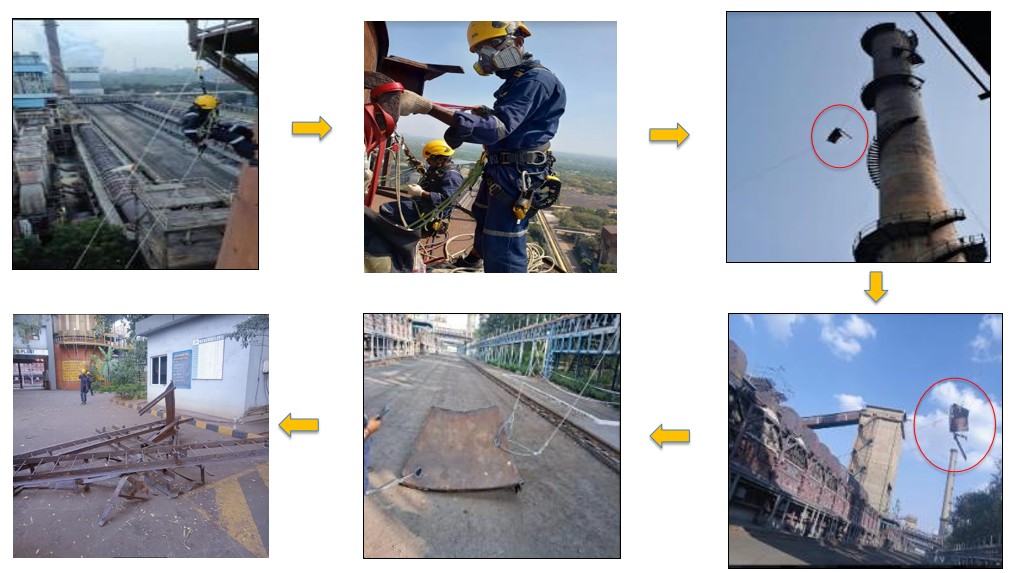
Can 75 meter tall steel chimney structures be dismantled without having a path for access?
Yes, we did. Since there was no proper access to the chimney between the 35 m and 75 m levels, we safely dismantled the corroded structures without any production loss. In this article, I explain how we implemented this method.
Our Steel Chimney 1B is used to discharge flue gases from Battery #1 ovens during WHRB-1 (Waste Heat Recovery Boiler) shutdowns. It is located near the plant entrance and office, where manpower movement is high. Debris and metal pieces falling from the chimney at heights ranging from 35 m to 75 m created a serious safety hazard for man power moving around the ground-level area.
75M Steel chimney details
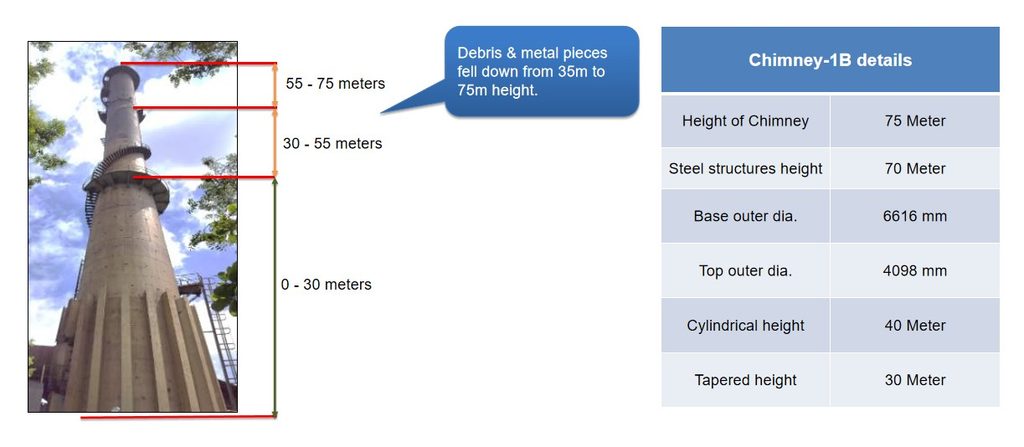
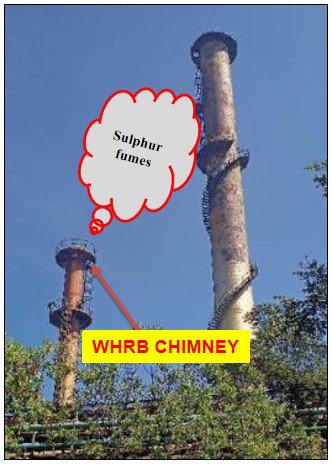
As per the flue gas analysis report for WHRB , the SPM level was 45 mg/Nm³, SO₂ was 300 mg/m³, and NO₂ was 90 mg/m³. The moisture content was 6–8%, oxygen was 7–9%, and CO₂ was 8–10%. The Boiler #1 stack temperature was 170–190°C, while the chimney surface temperature at the base was recorded as 90°C and the temperature at the 20 m level was 150°C.
The SO₂ level in the flue gas was found to be 300 mg/m³. These sulphur fumes, along with moisture, caused corrosion of the steel chimney structure, resulting in deterioration of the platforms, stairs, and other structural components.
This boiler is located near our 75 m-high steel chimney. We had two options. One was to connect the boiler exhaust to our chimney so that the sulphur gases could be discharged through the 75 m steel chimney. Considering the boiler’s operating parameters, we could not make this connection. Hence, we decided to dismantle the corroded structure of the 75 m steel chimney.
Using a drone camera, we inspected the structural condition of the chimney’s top section. The photographs are attached for your reference.
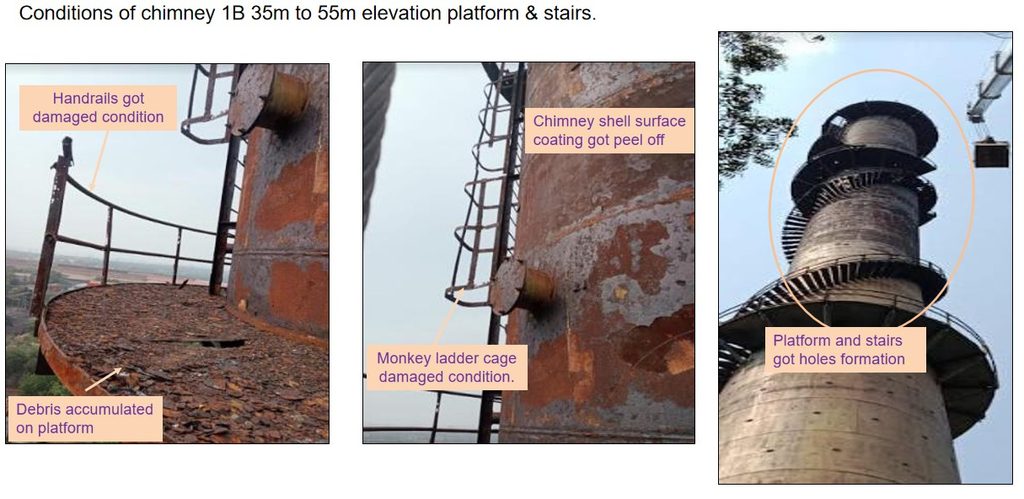
The following observations were identified in Chimney 1B
The platform handrails were damaged, a large amount of debris had accumulated on the platform, the coating on the chimney shell surface had peeled off, the monkey ladder cage was damaged, and holes had formed in the platforms and stairs between 35 m and 75 m. The debris was carried by the airflow and fell to ground level, obstructing the movement of personnel in the area.
We prepared the HIRA document for the identified hazards and assessed the risk rating as 32, which is considered an unacceptable risk.
Action taken
The initial proposal was to dismantle the platforms and stairs of Chimney 1B between the 35 m and 75 m elevations using a man basket with a 160T crane. However, the crane could reach only up to a maximum boom height of 60 m, allowing dismantling of only the south-side portion between 35 m and 55 m.
Dismantling the north-side portion would require a five-day shutdown, as production activities were ongoing on the north side, where the quench car travels with hot coke. Additionally, the 250T crane rental cost would increase by ₹0.75 lakh per day.
To overcome these problems, an IRATA-certified rope access system was proposed for dismantling the corroded chimney structures.
A budget of ₹9 lakhs was estimated for implementing the proposed action of dismantling the corroded chimney structures using an IRATA-certified rope access system. The budget requirement was prepared, and concurrence was sought for implementation.
The dismantling of the corroded structures was initiated using a rope access system by M/s. Aeris Marine Engineering.
The rope access system uses two separate ropes: a main working rope and an independent safety rope. The working rope allows technicians to move up and down the chimney using ascenders and descenders, while the safety rope provides backup fall protection. After reaching the required height, technicians secure themselves in a stable working position to carry out the dismantling work safely. This method enables trained technicians to reach difficult-to-access locations, such as corroded platforms, damaged handrails, and steel structures at greater height.
First, they welded a pad eye plate at a suitable height on the chimney. They then tied the rope to the pad eye and fixed another pad eye at a higher level. By repeating this process, they gradually moved upward until they reached the top of the chimney. The corroded parts were cut using a gas-cutting set. The removed pieces were then slowly lowered to the ground using ropes and pulleys.
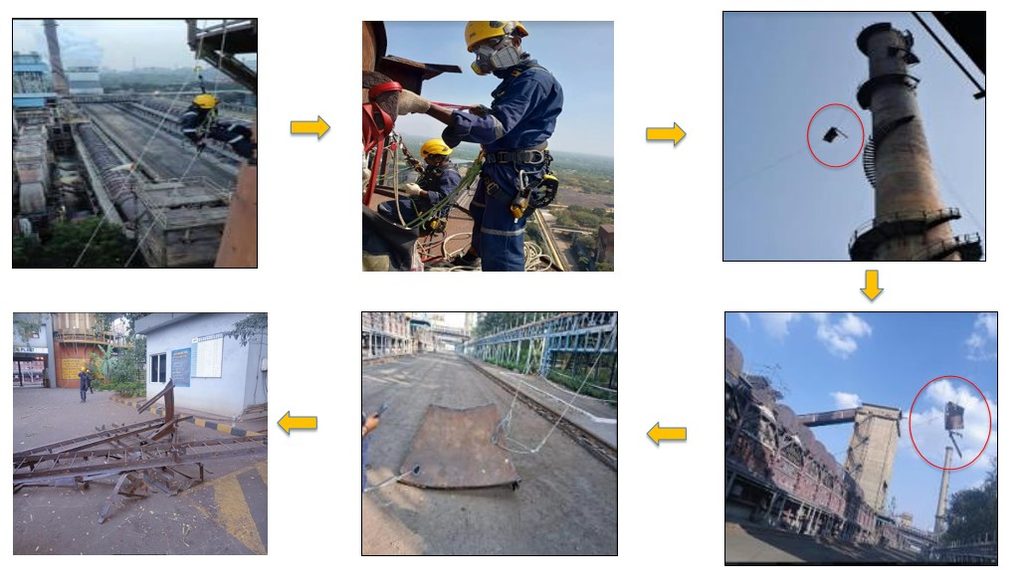
After the toolbox talk with permits, recuse plan, JSA the workers climbed up to the chimney and started the work. They stayed at the work area throughout the day and came down to the ground only in the evening. During the work, they did not eat regular meals. Instead, they carried water, fruits, and biscuits to the work area.
For safety, in addition to the usual permit system, JSA, rescue plan, lifting plan, PPE, and checklist, we took the following precautions:
- A two-way walkie-talkie was provided for better communication.
- Wind socks were installed near the chimney to check the wind direction and speed.
- The WHRB FD fan speed was reduced from 1,200 RPM to 700 RPM to reduce the exhaust gas flow from the boiler chimney.
- Work was monitored for weather changes such as rain and high winds.
Over one moth period the corroded structures were removed from chimney safely.
We are concerned that the chimney plate thickness may have reduced due to corrosion, especially in the middle and top sections. So, we decided to conduct an NDT test to check the chimney shell thickness. The thickness of Chimney 1B was measured using ultrasonic testing by M/s. Garuda Aerospace with the help of a drone.
After receiving the report, we found that the chimney shell plate was in good condition.
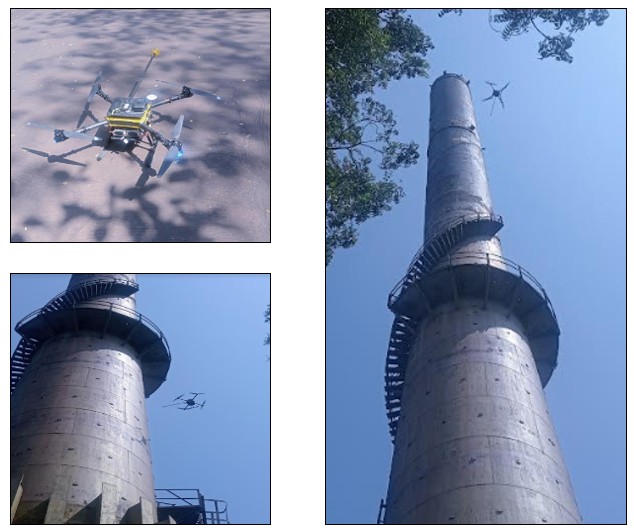
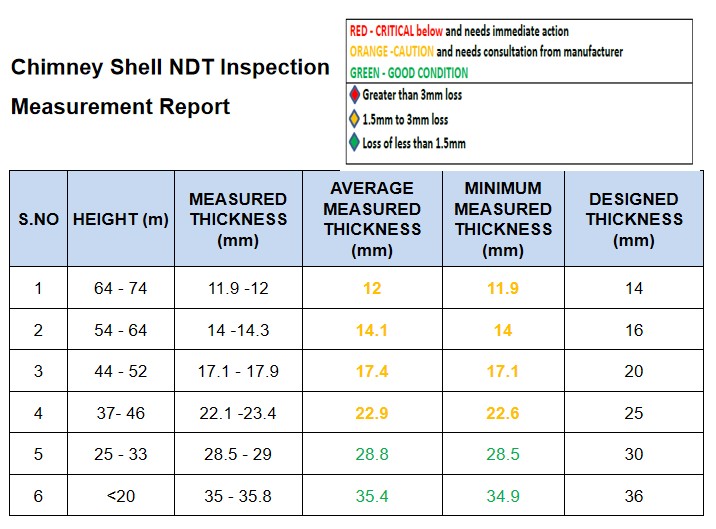
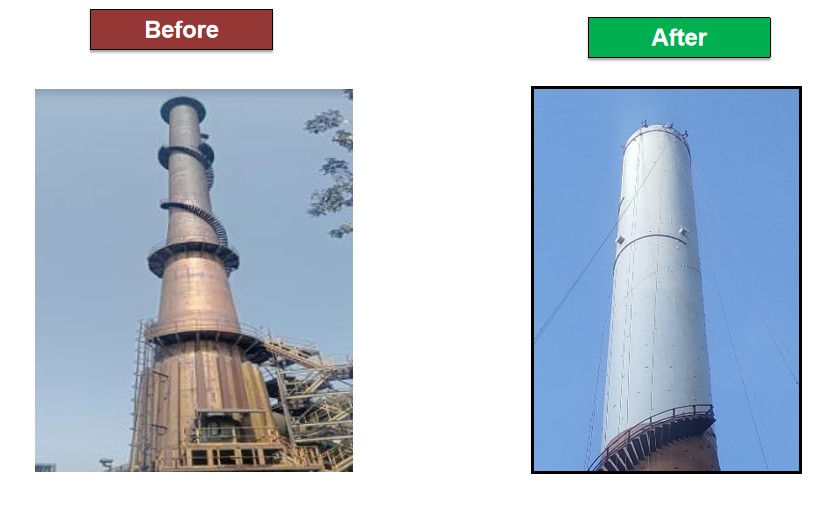
As the next step, chemical-resistant coating using Pidilite Zorrik 201 was applied to the chimney shell from 35 m to 75 m to prevent corrosion. The coating work was completed using the rope access method. And the total painting area was 700 square metres. The work was carried out by M/s. Balaji Transmission Belting Co., at a total cost of ₹18.24 lakhs.
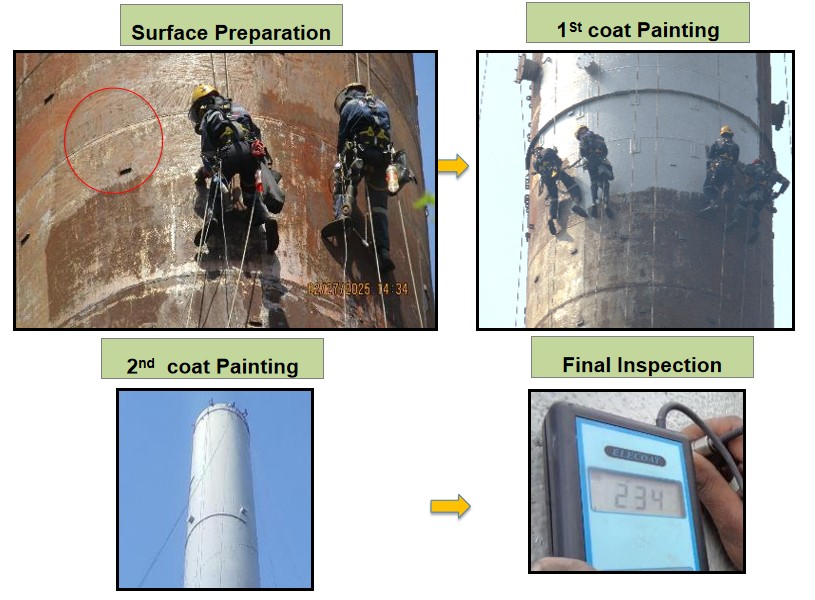
Here, I have shown the before-and-after photographs of Chimney 1B.
Benefits
- The HIRA risk rating was reduced from 32 (Unacceptable Risk) to 8.
- A safe environment was ensured around the chimney area.
- The service life of the chimney structure was extended.
- Structure Dismantling: The cost was reduced from ₹26 lakh using a 250T crane to ₹9 lakh using the rope access method, saving ₹17 lakh.
- Chimney Painting: The cost was reduced from ₹26 lakh to ₹18.24 lakh using the rope access method, saving approximately ₹7.76 lakh.
Conclusion
This method also helped avoid production shutdowns and reduce crane dependency. We suggested implementing the rope access method across our plant wherever applicable to carry out similar maintenance and dismantling activities safely and cost-effectively. This activity can be horizontally deployed at your site wherever similar structural dismantling work is required, improving safety and reducing overall costs.
Also read: These Improvements Can Reduce Your Hydraulic Maintenance Burden in Industries
One Comment